Showing posts with label links. Show all posts

Friday, 4 September 2015

The Scotsman Abroad | On Barker's Bite

Remember when Clive Barker mattered? 
Time was, he stood shoulder to shoulder with Stephen King and his kith and kin as one of the heavy hitters of popular horror. In the late '80s and all through the '90s, his seamless weaving of the stuff of sex together with the inevitable perversity of death led to a string of critical and commercial successes including Weaveworld, Cabal, Imagica and Everville. But over the years, the man became a brand. The macabre amalgam of visceral violence and exotic erotica that set his narratives apart from the pack at the start had, by the time of its samey culmination in Coldheart Canyon, diminished his fiction. Barker was about to lose his bite—such that it was a relief, really, when he changed gears completely.
As a long time admirer of the aforementioned author, and a die-hard fan of the Hellraiser franchise—up to and including the stupidest sequels—I had high hopes for The Scarlet Gospels, which sees Clive Barker taking ownership of the High Priest of Pain for the first time since, I think, the first of the films.
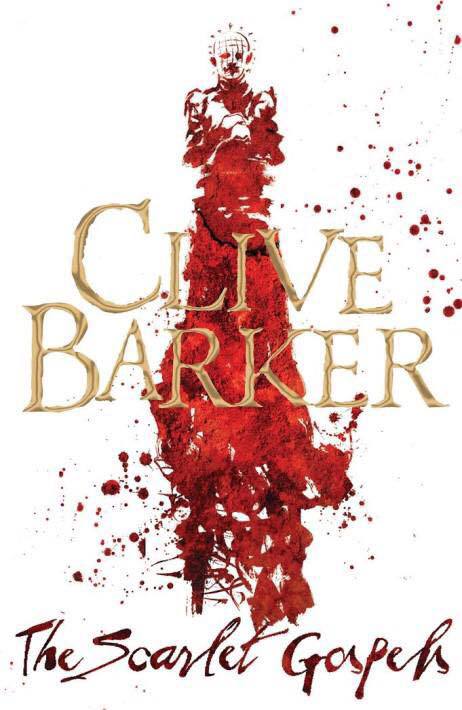

If anything, my expectations were raised when, after something like a decade on the drawing board, The Scarlet Gospels saw the light of day this past May—and what do you know? It was relatively well received. Most of the reviews I perused were good going on great, so when I finally got around to reading Barker's first proper horror novel—excepting Mister B. Gone and the Abarat books—in nearly fifteen years, I was basically beside myself with excitement.

And you know what? That first chapter? Fucking. Fantastic. Classic Clive Barker.

But from there on out, I'm afraid, The Scarlet Gospels is "business as usual, at best." And the rest of the time, "it reads like an unsightly reminder of a writer past his prime."

Strange Horizons has my full review. Please do click on through.

Tuesday, 12 May 2015

The Scotsman Abroad | The Deleted Testament of Hal Duncan

Sorry it's been so long! I'll explain The Situation in a few days, I swear.

For the time being, as I'm sure some of you know by now, it was my pleasure yesterday to help tease Testament—the first novel to come from my fellow Scotsman Hal Duncan in damn near a decade—over on Tor.com.

Testament itself is a properly exciting prospect, but to tell the truth, anything that has to do with Hal has a special place in my heart. You must be wondering why. Well, I spent a wee while explaining exactly that in my first pass at the aforementioned article—though I realised the error of my ways before hitting submit on the thing, given that said section would surely be rather more relevant here on The Speculative Scotsman than on Tor.com. 

Without further ado, then—a deleted scene from The Testament of Hal Duncan:
It’s been damn near a decade since The Book of All Hours blew my tiny mind. 
I was still a student in 2005—of English literature, largely, alongside a spot of philosophy. As I recall, I was within sniffing distance of my degree, and well pleased to be, but by then I’d become so sick of my subjects that the prospect of never having to read anything else ever again had real appeal. 
Clearly, it wasn’t to be, because come the conclusion of my course, a couple of books broke through. These books—books like The Scar by China Mieville and City of Saints & Madmen by Jeff VanderMeer alongside Hal Duncan’s tremendous two-volume debut—opened my eyes to a whole new world of words. In short, it’s fair to say that Ink and Vellum helped made a speculative fiction devotee of me. 
Duncan has been pretty prolific as an author and as an editor in the short story scene since—see Fabbles the first, Scruffians! and Caledonia Dreamin’—and as my two year tenure as co-curator of the Short Fiction Spotlight shows, I hope, I’m a huge fan of the form.
But sometimes a novel is needful. Sometimes an author requires the room long-form fiction allows to thoroughly explore a theme or an idea. To wit, I’ve been watching Notes from New Sodom like a hawk, and in April, the aforementioned author teased something called Testament. I reached out to find out more about the project post-haste, and today, it’s my pleasure to tease you about Testament in turn.
Read the remainder of the reveal right here.

Rest assured, in the interim, that you and I will talk again shortly.

Monday, 27 April 2015

The Scotsman Abroad | Ascending the City of Stairs

As we speak, I find myself on a bit of a science fiction kick. On the back of Way Down Dark by James Smythe and Crashing Heaven by Al Robertson, I'm deep in Seveneves by Neal Stephenson, with Slow Bullets by Alasdair Reynolds, Nemesis Games by James S. A. Corey and Aurora by Kim Stanley Robinson coming up.

Far be it from me to moan! The first few of those books have been brilliant, and I have every reason to expect great things from the remainder. If I had my druthers, I'd be reading a bit of fantasy, a spot of horror and maybe a mite of crime between all that sf, but deadlines are deadlines, and that's fine.

Happily, the last fantasy novel I read for review was tremendous, too—apart from a somewhat sluggish start:
Building worlds is hard work: a self-evident statement which goes some way toward explaining why most authors make do with the mundane plane that has us all in its thrall. But putting the umpteen pieces of truly wonderful worlds together—worlds whose histories and mysteries resonate with readers and ring of authenticity despite the fact that they’ve been conjured whole-cloth—has to be harder by far. There’s no right way to do the deed, either, and the field is replete with wrong ‘uns. Some creators descend into tedious detail; others leave so much to the imagination that the foundation of the fiction that follows is fitful. Robert Jackson Bennett falls fleetingly afoul of the former problem in his first full-on fantasy; but I’ve got good news, too, in that the world, when it is built, is brilliant: the story of City of Stairs springs from Bennett’s setting, leading to a feeling of coherency, of completeness, that precious few fantasies can match. The narrative’s characters, too, are inextricably of the divided domain it describes. 
Imagine, if you will, a realm in which gods once walked among men: a Continent complete with a half-dozen different living divinities. No one can say with any certainty where they came from, or what they could possibly have wanted—only that each of the six built its own city, its own base of operations, and called upon its most fervent followers to further the divergent doctrines of their chosen one of choice.
Read the rest of my review of City of Stairs on Strange Horizons. You can and you should, too. It's a bloody good book—certainly the most satisfying fantasy I've laid eyes on since Smiler's Fair.

Thursday, 19 March 2015

Bargain Books | Day of The Book of the Dead

A mailshot from the Jurassic London lot last night alerted me to a one-day-only deal that I'd be doing you all a disservice not to talk about. The story goes:
Amelia Edwards—author, suffragette, archeologist and founder of the Egypt Exploration Fund—is receiving a well-deserved Blue Plaque from English Heritage [today]. 
The Book of the Dead, our anthology of all-original mummy fiction, is dedicated to Amelia Edwards. As a novelist and talented writer of the supernatural, an outspoken champion on social issues and a pioneering archeologist, she is an inspiring figure in every way. 
In her honour, we're giving The Book of the Dead away for free for 24 hours—you can download it from any Amazon site. We want to spread the word about Amelia Edwards, great, contemporary mummy-fiction and the hard work of our partners at the Egypt Exploration Society, so please: treat yourself to a copy of this amazing (multiple-award-nominated) anthology, and also tell your friends!
That's what I did, and that's what I'm doing!

Given that the publisher is a not-for-profit, I'd have felt far worse about bagging a digital edition of The Book of the Dead for free if I hadn't already plunked a few pounds down for a copy of the paperback. Say you feel the same or similarly: why not show your support by buying Unearthed, the companion piece to The Book of the Dead, or else Jurassic London's latest anthologies, Jews vs. Aliens and Jews vs. Zombies?

One way or the other, don't miss your window, because The Book of the Dead is—as I wrote in my review—incredible.

Thursday, 11 December 2014

You Tell Me | The Year's Best Books

I still struggle to believe it's 2014, never mind the end of the year, nearly, but I'm reliably informed that I'm wrong. Not for the first time, nor the last, naturally.

The end of the year has come to mean something new to me, in recent years. There's Santa, sure; the birthday of the baby Jesus, but of course; and a bit of a break—yay! In advance of all that, though, the end of the year has, since the dawn of The Speculative Scotsman, signified a period of comprehensive critical consideration.

To that end, I tend to keep a list: of all the books I've read, the movies I've seen, the video games I've played, and so on. I failed at that in 2014, for various reasons, so forgive me, folks, if I overlook more than I usually do when the time comes to tackle Top of the Scots.

Truth be told, I was hoping we could compare notes—to begin with, about some of the best books we've read this year. Let me start you all off with a bit I contributed to the recent Reviewers' Choice on Tor.com:
2014 has been a banner year for British science fiction, beginning with The Echo by James Smythe—an immensely upsetting sequel that doubled down on the awesome promise of its unsettling predecessor—continuing courtesy Claire North’s fantastic Life After Life-alike, The First Fifteen Lives of Harry August—a very different sort of novel than The Echo, yes, yet no less memorable—and concluding, because we’re already running out of room, by way of The Bone Clocks: the closest thing the man who came up with Cloud Atlas has written to a proper genre novel over the course of his career.
Reading through the other reviewers' recommendations, it's clear that I've completely failed at fantasy in 2014. I haven't read The Goblin Emperor by Katherine Addison, City of Stairs by Robert Jackson Bennett or The Mirror Empire by Kameron Hurley, though I sincerely mean to make time to catch up on those books over the break.


I feel much more up to speed on my science fiction. That said, All Those Vanished Engines by Paul Park managed to pass me by, and if ever a novel had my name on it...

Horror-wise... well. Here's where the lack of a list has really ruined me. I remember really liking the opening act of Revival by Stephen King, but it ended—spoiler warning—with giant evil ants, and gah all over that. To the best of my recollection, then, the only horror story that really stands out to me is the Southern Reach series by Jeff VanderMeer. Annihilation might just be the best book of the year, according to me. We'll see.

But please, you tell me: what have you read in 2014 that really rocked your socks?

Thursday, 21 August 2014

The Scotsman Abroad | Gone Goodreading

I'm sure this sounds counter-intuitive coming from a blogger, but social media and me, we... we have a somewhat strained relationship. It's true that I tweet; it's true, too, that that's been as much as I can manage—and sometimes, I'm crap at managing that. I'll either be tweeting all the time or not at all.

I'm just bad at balance.

Over the years, though, I've come to realise that community is crucial. Especially for a blogger based somewhere as out there—relative to the likes of London—as the boondocks of Scotland. So a week or so ago, an invite inspired me to give in to Goodreads. I signed up for an account, sent a few (hundred) friend requests and set about filling a bookshelf or two.


To my surprise, it's been a bunch of fun so far. I particularly enjoy having a place to put my immediate reactions to texts as they develop, and I figured a few of you might do too. So if you're interested in reading my ramblings about the books I'm reading right now—books you won't see reviews of on The Speculative Scotsman for some time, typically—feel free to friend me, folks: on Goodreads, or indeed on Twitter, Xbox Live, PSN, Steam and so on.

My username is always niallalot.

Perhaps one day I'll tell you why...

Wednesday, 13 August 2014

The Scotsman Abroad | The Afterparty At Last

Some time ago, I told you all how much I was looking forward to Daryl Gregory's new novel. Well, its release date in the UK is this week. At long last, the Afterparty is upon us!


Alas, I didn't love it. In my review for Strange Horizons, written around the time of Afterparty's publication in April Stateside, I commented as follows:
Taken together, The Parable of The Girl Who Died and Went to Hell, Not Necessarily in That Order, and The Sixth Sense twist at the back of the first chapter, when it dawns on us that Dr. Gloria is a pharmaceutical figment of Lyda's lively imagination, do a terrific job of eliciting interest—intrigue, even—in Afterparty, but what follows is, if not flat, then fairly familiar. Too soon, Gregory disposes of the doctor—she has a good Christian conscience, of course, so Lyda's abuse of Ollie bothers her—and in her absence, Afterparty becomes a more mundane chase-and-escape affair than the suggestive start of the book moots: it's revealed to be a thriller as opposed to a thinker, less Philip K. Dick than Lee Child or the like. 
It's a credit to Gregory that the going is engrossing in any event, in large part because of its pitch-perfect pace: a race to the finish line, in fact, between Lyda's lot and a cowboy contract killer called Vincent—pardon me: the Vincent (don't ask)—by way of a series of exciting set-pieces, such as the party's botched border crossing after an uncomfortably close encounter with an elderly Afghan drug distributor. 
On the back of Raising Stony Mayhall, I don't suppose it should come as a surprise that the author is more interested in character than narrative, but I found it harder to love Lyda than I did the eponymous zombie of Gregory's last novel, and Afterparty's plot, though perfectly paced, proved more pedestrian than that suggested by the promising premise.

Afterparty is a good book, to be sure, but here I'd been hoping for something superlative. Do yourself a favour and read Raising Stony Mayhall instead. Now that is an awesome novel.

Wednesday, 18 June 2014

The Scotsman Abroad | Rise of the Franchise

I don't know what it is about these things, but every time the fine folks at SF Signal ask me to take part in a Mind Meld, I end up banging on about Batman.


I guess I've got a decent excuse this afternoon. Here's the question James Aquilone posed to the panel:
DC reportedly has at least seven movies in development. Marvel has movies planned out to 2028. Star Wars kicks off a new trilogy next year and has at least two spinoffs already in development. Then there are the upcoming TV shows—Gotham, The Flash, Agent Carter, Daredevil... 
Is this too much of a good thing? Or a dream come true? Do you ever get sick of the constant movie news updates? What are your thoughts about the recent influx of shows and movies from these big franchises?
I took this open-ended question as an opportunity to talk about original ideas as opposed to established IP... albeit by way of franchise fatigue, finance, the overabundance of quality entertainment available to us today, and the forthcoming police procedural featuring baby Bruce:
Ideas are easy. If all it took to make a movie or greenlight a TV series was an awesome concept, we’d all be multimedia moguls, made of money—money we could pour into more original intellectual property, perhaps. But banking on original characters and shiny new narratives is, in the industry today, a dodgy bet at best. Better by far, financially, to latch on to an established franchise, which comes with interest built in; with a fanbase gagging to evangelise a few of their favourite things.
As I mentioned in the last Mind Mind I was asked to be a part of, I’m a longstanding Batman fan, so I’ll be watching Gotham in the autumn—for long enough, at least, to see if it’s for me. Would I if it lacked those connections? It’s not likely, no.
I love new experiences, in theory. In practice, alas, I’m more prepared to spend my minutes and my and my monies if I can try before I buy. So if there’s a problem, and I think there is, then I’m a part of it. I imagine most of us are. But we haven’t done anything wrong, really... or else, that’s what I tell myself.
Read the rest of my ramble right here, along with answers from a selection of other irregulars, including Douglas Cohen, Abby Goldsmith, Deanna Knippling, Derek Johnson, Lisa McCurrach, Melanie R. Meadors and Paul Cornell.

Monday, 26 May 2014

The Scotsman Abroad | Award-Winning Short Fiction

Rather than annoy you all every time one of the columns I curate I is published on Tor.com, I've allowed them a life of their own of late, but with awards season in full swing, I wanted to make an exception today.

Before the Short Fiction Spotlight, short stories were a blind spot of mine, and I have reason to believe that's the case with a great many genre fiction fans. By dint, I dare say, of our well-documented fondness for vast sagas and expansive narratives, fiction of the aforementioned form is sometimes seen as inadequate, inessential.

But it isn't. I've come to believe that some of the most important stories being told today are expressed in 8,000 words or less. And it's so satisfying to start and finish something quickly, especially for a serial reader like me.


In short, short fiction = awesome. Particularly short fiction along the lines of the two tales I've shone the Spotlight on in recent weeks. And you don't have to take my word for it, either. The subject of the first column I want to point you all towards today—'The Waiting Stars' by Aliette de Bodard—just won the Nebula Award for Best Novelette:
Catherine’s contemplative sections can of course be read as a response to the real-world brainwashing of so-called “savages” by the dominant races of the day: an uncomfortable subject which de Bodard addresses as sensitively as ever. It’s of particular significance that her depiction of the issue does not insist; instead, it suggests, allowing readers to make the story their own by bringing different details to the table. 
This openness is no less than I’ve come to expect from de Bodard’s short stories. She’s an incredibly generous author, well-practised in her purposes and dexterous in their development. Crucially, she’s also capable of writing gripping science fiction. Take the other half of the whole: though it is no less nuanced than Catherine’s, our time with Lan Nhen is more typical, more traditional. It’s practically action-packed, in fact—at points I was reminded of reading a story by James S. A. Corey. 
Likewise, Laird Barron just took home a Bram Stoker Award for 'The Men From Porlock,' an immensely unsettling short that's haunted me since I reread it recently:
Few authors can pull off cosmic horror as confidently as Laird Barron can, and this story is a stellar example of his carefully controlled craft. As Norman Partridge notes in his introduction to The Beautiful Thing That Awaits Us All, ‘The Men From Porlock’ “mates Lovecraft with the best of Sam Peckinpah. It’s The Wild Bunch versus the Old ones, and it’s a magnificently brutal tale that would make HPL cry for his momma.” 
I don’t know about that—dead men tell no tales, and I dare say it’s about time we left off talking about the historical origins of this form of fiction anyway—but contemporary cosmic horror doesn’t get better, and it pleases me a great deal to hear the HWA say so.
Long story less long: please do pop on over to Tor.com if you're in the least interested in short fiction. And if you aren't, then there are something like sixty editions of the Short Fiction Spotlight in the index as it stands—more than enough to spark a short fiction fire.

Wednesday, 19 March 2014

The Scotsman Abroad | The Great Geeky Debates

Maybe you'll have spotted it, maybe not... but guess what? I was in this morning's Mind Meld!

In case you weren't aware, the Mind Meld is a regular feature on the Hugo award-winning SF Signal which asks a bunch of genre fiction's best and brightest to put their heads together to answer a certain question. 


Truth be told I don't know what the Irregulars were doing, inviting yours truly to participate, but I wasn't going to miss it. Didn't hurt that the question was such a fun one. Let me hand it over to James Aquilone:
What was the first or most memorable geeky pop-culture debate you ever had? Or what’s that one thing you can’t stop ranting about? What was the outcome? Are you still on speaking terms with your opponent? Why are you so passionate about this?
In response, I wrote about "the years a friend and I spent butting heads over a couple of comic books. He was a Marvel man; me, a DC devotee. He read The X-Men; I was an unabashed Batman fan. Matter of fact, I still am, and I’d bet my last penny he’s still got the hots for Emma Frost."

Be warned, though, that my piece, at least, takes a turn for the serious... because this friend is firmly former, unfortunately, and our different interests—up to and including the arguments we had about whether Batman and his entourage would be a match for Marvel’s supermutants—had a part to play in that:
As kids we were great mates, he and me. As adults, our friendship fell apart. So whether it’s Star Trek versus Star Wars or the merits of manga as opposed to anime, take heed, dear reader: at the end of the day these debates can be about the people as much as the particular properties.
Click on through, as you do, to read the rest of the Mind Meld in question, which also features Mur Lafferty, Maurice Broaddus, David Lomax and a whole load of other awesome authors. 

(I'm aware that I'm the only contributor without a short story or novel to my name, but I have no shame.)

Thursday, 14 November 2013

You Tell Me | The Women's Prize for Fantastic Fiction

Just a quick one today, to point you all in the direction of yesterday's edition of the British Genre Fiction Focus, in which I proposed a new award called the Women's Prize for Fantastic Fiction.


Why?

I'd have thought the answer would be obvious:
As a community, we’ve cried out again and again for better representation of the “invisible women” working in the male-dominated genre fiction industry... but crying out, however loudly, clearly isn't going to cut the mustard. So let’s do something about it, damn it! Let’s you and I put our heads together and figure out a speculative fiction friendly version of the Baileys Women’s Prize for Fiction. Kind of like the Not the Booker Prize that The Guardian has. 
A word to the wise: this isn’t going to lead to some seismic shift in the industry. Publishers may or may not change their ways, and whenever they do, if ever they do, they’ll change at their own pace. But if that’s the case, why wait? 
If any woman writing genre fiction in English — whatever her nationality, country of residence, age or subject matter — is eligible, then who and what would our nominees be? The only caveat I'd add is to keep our nominees to books published this year, please.
Do click on through to read the entire article, and leave your nominees in the comments.

Let me start you all off with a fantastic five of my own devising:
  • The Best of All Possible Worlds by Karen Lord 
  • Life After Life by Kate Atkinson 
  • The Golem and the Djinni by Helene Wecker 
  • Ancillary Justice by Ann Leckie 
  • The Language of Dying by Sarah Pinborough 
So what am I missing? What would your nominees be? You tell me!

Thursday, 7 November 2013

The Scotsman Abroad | On Graham Joyce

Yesterday I received an email that brought both my partner and I to an absolute standstill.

We've both been reading Graham Joyce for years, you see; Memoirs of a Master Forger was my first of his works, whilst the other half has had a passion for his ghostly prose since The Silent Land. Invariably, one of us will manage to bagsy his new book before the other does, such that it's become something of a game between us.


So the news that he has cancer, that he nearly died six months or so ago... let's say it cast a dark cloud over the remains of the day. Per the press release I received:
Graham Joyce received a standing ovation at the 1,000-strong awards ceremony of the World Fantasy Convention in Brighton on Sunday 2nd November 2013. Picking up the Best Fantasy Novel Award for an unprecedented sixth time in his career, Joyce was earlier this year diagnosed with aggressive lymphoma cancer. The event marked his first public appearance since his diagnosis.
Joyce won the Best Fantasy Novel Award for Some Kind Of Fairy Tale, a story in which a young girl thought to have been abducted from the woodlands of the East Midlands returns to her family after twenty years. 
Six months ago Joyce had the experience of being revived by an emergency resuscitation team at the Leicester Royal Infirmary. Joyce said, “Just being able to stand here today is a wonderful award, thanks to the doctors and nurses of the NHS.”
Inadequate as it is, I can only express how happy I am that the doctors and nurses of the NHS managed to bring the man back, and how sorely I hope that he has many more years of good health ahead.

In any event, I've seen a fair few folks express curiosity about his work since the bad news broke, and I'd love for them to discover him as the other half and I have, so I thought I'd gather together links to the reviews I've written of his books.

Here's what I had to say about The Silent Land.

Here are my thoughts on the book he won the Best Fantasy Novel Award at the weekend for.


And to top it all off, my most recent article for Strange Horizons was a glowing review of his new novel, The Year of the Ladybird:
Almost forty years on, the scorching summer of 1976 is remembered by many; however the relative tenor of the tale depends upon the perspective of the teller, very much in the mode of local legend. Some speak of it as a bastion of all that is great about Britain... or all that was, once. Others recall the summer as a season of suffering; of water shortages, hellish heat, economic depression, and — what with the National Front nearing the peak of its power — political volatility. 
Each of these ideas has a part to play in Graham Joyce's new novel, but like the infamous insect invasion The Year of the Ladybird takes its evocative title from, they're in the background, by and large, adding if not narrative impact then immersive depth and telling texture to the text's redolent setting: a ramshackle holiday resort in a nation coming of age just as our protagonist David Barwise does over the course of this slight but delightful ghost story.
Graham Joyce is, in short, an awesome author: if you've been on the fence about his fiction, get the hell off it.

My thoughts, and my partner's, will be with him and his during this difficult time.

Wednesday, 11 September 2013

The Scotsman Abroad | Summiting Mount Mind Meld

A little while ago, I received an email from the esteemed Paul Weimer, wondering whether I'd be interested in participating in the latest Mind Meld he was putting together. It was an absolute honour to be asked, so of course I agreed immediately.

But what with everything else that's been going on in my neck of the woods in recent weeks, this past weekend was the first opportunity I had to work on my response, and as it happens, I had just caught a cold from the wicked children I tutor when I'm not silly busy reviewing books.


Determined not to disappoint, I managed to put a piece together in any event, and though I hardly remember writing it, seeing it on the Hugo Award-winning SF Signal this morning — alongside responses from Cheryl Morgan, Ian Sales, Anne Lyle, Lou Anders and a goodly number of others — I'm really rather pleased with how my first contribution to the Mind Meld turned out. It's as much a reflection on how I approach Mount To-be-read today as it is an accounting of the books that are in my bedside cabinet at the moment:
I warrant we all have our own ways of describing the groups of books we mean to read. Mount To-be-read works for me, but mostly because it suggests something more; something I can’t help but correlate with all the climbing I did as a kid. 
Maybe climbing isn’t the right way to describe the year-round hobby my dad and I had. Hillwalking was what we were about. Come rain or shine, sun or snow, my Munro Bagger of a father always had some summit in mind. 
Many climbs I quite liked. But there were others. Bog-ridden slogs. Hills that went on and on and on, only to end in anti-climax: a beautiful view obscured by overcast clouds, or a chance meeting with other people — and up there in the middle of nowhere, that tended to cheapen the experience. 
Part of the problem was that my dad was far fitter than I. Matter of fact, he still is — as evidenced by the last hill we walked. That is to say, we climb together to this day, though rather less often now than then. Then, I hardly had a lot of choice in the matter... thus there were times when I hated the hills. I hated how hard they were, how fleeting the feeling of overcoming one when the next was only ever a weekend away. 
Sound familiar?
I may repost my response in full here on The Speculative Scotsman at a later date, but a large part of the pleasure of the Mind Mend, for me at least — and I've been following the feature for years — is seeing how differently every participant responds to the selfsame question; how one response reflects and refracts the others around it.

So please, head on over to SF Signal and read today's most excellent Mind Meld in its entirety.

Thursday, 22 August 2013

The Scotsman Abroad | The Adjacency Effect

Horror of horrors: I've been without the internet for the last 48 hours!

Actually, aside the initial inconvenience, it's been a fine few days. I squeezed a whole hell of a lot of reading in, finished the superior third season of The Killing, played the final Dishonored DLC, and caught up on a few awesome comics.

It's amazing, the sheer quantity of stuff you can get done when you aren't distracted by emails and tweets and feeds and so on. If I'm honest, when I woke up this morning to see that they'd fixed things at the exchange, I was almost disappointed. Almost.


In any case, I've got an awful lot to catch up on before I'm back on track, so today, for your entertainment, let me point you elsewhere.
Seamless storytelling can sometimes seem like magic, but in The Adjacent, Christopher Priest goes to great lengths to stress the applied aspects of both practices: 
"What I do [...] is contrived to look like a series of miracles, but in reality the preparation of a magical illusion is a prosaic matter. Few people realise the amount of rehearsal conjurors have to put in, nor what goes on in the background. A trick often requires technical assistants, who will help design and build the apparatus. The movements a magician makes on stage are the result of long and patient rehearsal, while still having to look natural and spontaneous to the audience. It is an acquired practical skill, in other words. Only while in performance, in the glare of the limelight, can magic look like inspiration. Even at best it is never more than an illusion. Things are never what they seem." (p.86)
This is true of almost every facet of The Adjacent. Its narrative feels fairly straightforward at first, but the farther into the fold we go, the less linear and logical it looks. One tale turns into two, two into ten... ten threads or thereabouts, then, which contradict as often as complement one another, seeming to stand alone from the whole at the same time as suggesting some imperative collective resonance. Meanwhile, whatever motivations or expectations Priest's cast of characters either have or lack at the outset are quickly obliterated; annihilated on even the theoretical level by something uncomfortably akin to the Perturbative Adjacent Field proposed by Professor Thijs Rietvel.
You can read the rest of my review of The Adjacent over at Strange Horizons.

In short, it mightn't be the place for readers new to Christopher Priest to begin, but for those of us who've stuck with him through thick and thin, it's an astonishingly rewarding novel. In long... well, you know where to go.

Thursday, 25 April 2013

The Scotsman Abroad | Speculative Fiction 2012

You're probably sick and tired of hearing about Speculative Fiction 2012 already, but you know what? I'm not. I'll talk about this collection of formerly online criticism and insight till the cows come home.

Indeed I have done. It's given me something tangible to point people towards when explaining what I do on a daily basis; here, finally, is a physical thing that showcases why being a blogger is so meaningful to me. What I take from the community, and what I like to think I give to it.

Which is to say, by God, guys: I've been published! And look at the stunning company I seem to be keeping:
How do you write female characters with agency? What did J. R. R. Tolkien learn from Attila the Hun? What is it like to be a dragon? Is science fiction stuck in a rut? The Internet has the answers. Speculative Fiction 2012 collects over fifty articles from some of the top bloggers and authors in science fiction and fantasy, including over two dozen reviews. Contributors include Joe Abercrombie, Daniel Alexander, Kate Elliott, N. K. Jemisin, Aidan Moher, Abigail Nussbaum, Christopher Priest, Adam Roberts, Tansy Rayner Roberts, Sam Sykes and Lavie Tidhar.
That's the product description of the first edition of this awesome annual anthology on Amazon, and if you look closely, you'll see I've been hybridised with Daniel effing Abraham, who said of this obscenity yesterday: "If I have to be transporter-mushed with someone like a postmodern remake of The Fly, Niall will do just fine."

To which I can only add... likewise! But let's not with all the horrible vomiting.

Restraining myself from blogging about Speculative Fiction 2012 till today has been torture of the highest order, so I'm beside myself with excitement to finally get this thing out of my system.


In case you were wondering why I've waited, well, I'm a believer in timely buying advice rather than getting my reviewer's foot in first, and the collection only came out today. I can't recommend Speculative Fiction 2012 highly enough... not because I'm in it, or because it features many much better bloggers and authors that I, but because it serves in a very real sense to legitimise what we have here.

In closing, I'm going to hand it over to Jared and Justin of Pornokitsch and Staffer's Book Review respectively—the fine folks who took it upon themselves to produce this pièce de résistance:
Let’s be honest, no one takes us seriously. ‘Blogging’ is barely reviewing and certainly never ‘criticism’. We’re not paid, so we’re amateurs. We’re doing it for love, so we’re fans. Our opinions are merely our own, and not on behalf of a higher authority, like a newspaper or magazine. While our work sticks around, you’re only as good as your last post. And once something is off the front page, it might as well be gone forever... 
Speculative Fiction 2012 is meant to showcase the best of that passion. We’re not journalists, scholars or authors. Or, even if we are (we’re not), we’re contributing to the discussion because we love it. From our perspective, this kind of work deserves to be collected, immortalised, and substantiated. Literally.
If you'd like to buy a copy of the anthology, here's a link to the product page on Amazon.co.uk. If you're based in the USA, this is the link to click.

Whatever proceeds there are will go to Room to Read, so the more, the merrier.

One last thing before I bid you adieu: if you're interested in talking to some of the bloggers and authors behind the scenes of Speculative Fiction 2012, there's going to be an Ask Me Anything session on Reddit on May 2nd.

I don't really know what that means, but I'll try to figure it out before next Thursday. It's for a fantastic cause, after all. Literally.

Friday, 12 April 2013

The Scotsman Abroad | Marking the Clarkes

Three months in, I can only hope most of you are familiar with the British Genre Fiction Focus: the weekly column about news and new releases in the UK that I contribute to Tor.com.

The response to the series so far has been more positive than I could have imagined, but with every additional edition, I've wondered whether some of the more meaningful news stories I ruminate on each week wouldn't be better serviced in articles of their own.

Well, yesterday was something of an acid test in that respect. Yesterday, the first special feature from the British Genre Fiction Focus fold was posted, and luckily, I had a hell of subject to tackle: namely the recently released shortlist for the Arthur C. Clarke Award, especially the overwhelming presence of penises amongst the authors nominated.

Anyway, in Marking the Clarkes, I attempt to round up some of the most representative reactions to the alarming absence of women writers on the shortlist, before pitching in with my own several cents:
So was the reaction to this year’s shortlist basically a case of much ado about nothing? 
No, it wasn’t. Absolutely positively not. There’s a very real problem in play that the subsequent back-and-forth has brought to the fore, finally. But I’d echo the thought that this alarming lack of diversity [...] can be traced back to the publishing industry rather simply set at the doorstep of a panel of individuals with autonomous opinions who announced an inherently subjective shortlist. 
One last wrinkle before I let you folks work out where you stand and why: the publishing industry lives and dies by the same rules of supply and demand as any other commercial sector. Accusing the bigwigs and the buyers, then, is too easy an out. After all, they buy the books that they have reason to believe we’ll read. 
Who then to blame for this dangerous state of affairs but ourselves?
If I may be so bold, Marking the Clarkes makes for an interesting read in its own right, but the real conversation has occurred in the comments section, already almost thirty thoughts long and strong, and featuring a few words from Tom Hunter himself, director of the Arthur C. Clarke Awards.

All of which is to say, you should think about reading this thing. Chiming in, even.

Fingers crossed I see a few of you over there. Otherwise, we'll talk again shortly.

Friday, 15 February 2013

Coming Attractions | The Abominable Mr. Simmons

Yesterday, Deadline reported that one of my favourite books of recent years is being turned into a TV series by AMC. The Terror is the incredible tale of two ships which were lost in the late 1840s whilst searching for a once-impassable route through the Arctic: the legendary Northwest Passage.

In Dan Simmons' awesome novel, the crew become frozen into the ice for a period of years: The Terror is the story of their survival in these extreme conditions, with limited supplies, fraying tempers, and—here's where it gets particularly interesting—an impossible monster with an appetite for people.


I've always had a soft spot for survival narratives. Also the Arctic. And boy, I do like me my monsters! Indeed, reading The Terror ticked all these boxes before I even realised they existed. So the news that AMC mean to make a TV series out of Simmons' alt-historical story leaves me with... mixed feelings. I'm sure it could be good. Hell, it could be really, really good. On the other hand, the way AMC have "dealt" with The Walking Dead, despite its surprising success, is dismaying.

(Side note: io9's most constructive comment about the announcement was that The Terror isn't The Thing. Well said, sirs! Or... wait. No. I take it back.)

Anyway, though Simmons has had the odd hit since The TerrorDrood was pretty good—by and large he's fallen out of favour again, so I wanted to draw your attention to his next novel, which I only discovered today. It's called The Abominable, and it sounds enticingly like a return to the territory of The Terror
In June 1924, famous British climber George Mallory and his climbing partner Andrew Irvine disappeared on the North East Ridge of Mount Everest. Most of the subsequent publicity did not mention that two other climbers were missing: the future Lord Wessex and an unnamed German support climber. 
A year later, climber, poet and war hero Richard David Deacon sees a way he and his friends can reach the heights of Mount Everest. He tells Lady Wessex that they will look for her son if she bankrolls the operation. Now the danger Deacon and his group face is not only from the treacherous conditions; they are also warned of the mythical 'man bear' demons of the mountain - which they dismiss until they hear roars so loud they drown out the 100 mile-per-hour wind that is tearing their canvas tent to shreds around them...
Amazon, however, seem to be doing their very best to garble the facts about the book. They're saying The Abominable will be out this April in the UK, weighing in at 432 pages, yet a quick trawl of the forums Simmons himself visits suggests we should be expecting another behemoth, at approximately 800 pages—and in October rather than a mere six weeks from Sunday.

Let me make no bones about it: whenever it's released, and however long it is, I can't wait to read The Abominable.

But after the ghastly Flashback, is anyone else willing to give Dan Simmons another chance?

Wednesday, 13 February 2013

The Scotsman Abroad | Best of British

I promise not to keep banging on about this, but lest any of you conclude I blog more rarely these days than I did—when nothing could be further from the truth—let me point you once again in the direction of the two columns I contribute to Tor.com.

To begin with, the latest instalment of the British Genre Fiction Focus was unleashed earlier this afternoon. This week's news round-up begins with a discussion of the perfect storm ruining high street retail in the UK, vis-a-vis the new world order under which Waterstones now operates, and ends with... well. A bit of a silly story.

Choose your own erotic adventure, anyone? :D

Then, in the second section, there are a huge number of new releases to look forward to, not least new novels from Adrian Tchaikovsky, Jim Crace and Christopher Brookmyre—a Scotsman after my own heart!


You can read the rest of this week's edition of the BGFF here.

Meanwhile, Brit Mandelo and I have been swapping the Short Fiction Spotlight back and forth, and yesterday it was my turn to direct it again. Click through for my thoughts of the British Science Fiction Association's Best Short Shortlist, including much discussion of a pair of fantastic candidates: "Three Moments of an Explosion" by China Mieville and "Adrift on the Sea of Rains" by Ian Sales.

I'll be concluding the review in two weeks. Beyond that, though? I have a few thoughts about what authors to subject to the Spotlight, sure... but I'm open to ideas.

So: which short stories would you like to see featured in the Short Fiction Spotlight going forward?

Friday, 8 February 2013

Kickstart My Heart | A Year of Daydreams & A River of Stars

I've been sceptical of this Kickstarter lark since the beginning, but for the right reasons, I'll gladly set aside my cynicism.

For instance, photographer Lauren Zurchin has announced a particularly interesting project. She's going to be "photographing fourteen of the world's most famous fantasy authors in custom hand-crafted costumes, and putting the photos together into a fantasy calendar for charity. The authors involved are Brandon Sanderson, Brandon Mull, Christopher Paolini, Gregory Maguire, Tad Williams, Patrick Rothfuss, Cassandra Clare, Holly Black, Lauren Kate, Lauren Oliver, Maggie Stiefvater, Gail Carriger, Tessa Gratton, and Brenna Yovanoff."


"This project is huge, and with the support of these authors I've taken to Kickstarter to raise the bare-minimum funds needed to make this project a reality. Every author involved in the project has offered limited edition exclusive items up for grabs—prizes that are only offered this one time and never again. Kickstarter contributors can find limited edition prints of their fantasy calendar photo (signed), wall posters (signed), "personalized packs" (containing prints, autographed calendar, and more—personalized and signed by the author), and calendars signed by all fourteen of the project's participants. There are several high-end prizes up for grabs, including Skype chats with a few of the participating authors."

Sounds super—not least because I could do with a nice new calendar myself. Honestly, anything would be preferable to another eleven months of dogs on holiday, but Lauren's Year of Daydreams looks independently lovely. Plus, she won't simply be pocketing the proceeds: the profits will be shared between First Book and Patrick Rothfuss' wonderful Worldbuilders project.

Hang on.

Here's a video explaining the whole thing:


Go on and pledge, then!

Meanwhile, if you've been anticipating River of Stars half as much as I have, this auction of a signed ARC must be music to your ears. Guy Gavriel Kay has blogged about what he'll be doing with the funds raised by the sale here.

If I didn't already have a review copy of Kay's huge new book, I'd put in a bid myself.

Given the beneficiary, perhaps I still will...

Thursday, 31 January 2013

The Scotsman Abroad | Introducing the Short Fiction Spotlight

Yesterday was a big day for your resident Scotsman!

In addition to the third instalment of the British Genre Fiction Focus—wherein I touched on the rebranding of Guy Gavriel Kay in the UK, the impact of the cold snap we've had on high street retail, the rise of "artisan authors" via The Guardian, and the announcement of The Time Traveler's Almanac—yesterday also saw the debut of the other feature series I've been working on for Tor.com.

Wonderfully, this once I wasn't working alone, because the Short Fiction Spotlight is a team effort between myself and the brilliant Brit Mandelo. Both of our first editions hit the front page at the same time yesterday, but from here on out we'll be sharing the Spotlight equally, which is to say one week Brit will curate the column, and the next week I will; then her again, then me once more, and so on and so forth—for all time if it takes off.

Long story short—and isn't that the point?—the Short Fiction Spotlight is live, and I'd love it if you took a look.

Here's how my half the whole starts:
Much as we like to tell ourselves otherwise, size absolutely matters. 
What? I’m a shorty; I get to say these things! 
But I mean the size of stories, of course. There are no two ways about it, I’m afraid: whether because of price or presence, viability or visibility, short fiction is the person at the party we politely ignore, or outright rudely overlook. 
I’m as guilty of this telling offence as anyone. In the second installment of my ongoing British Genre Fiction Focus column, I talked up the British Science Fiction Association’s Best Novel nominees—amongst many and various other subjects—yet neglected to mention the six short stories up for one of the BSFA’s other awards. I am appropriately penitent, as we shall see, but this sort of treatment is simply all too typical of the short shrift short fiction is given.
In order to address the problem head on, Brit Mandelo and I will take turns discussing a selection of short stories. As we alternate weeks, Brit will be writing about magazines, primarily—whether physical or digital—meanwhile I’ll be going wherever the wind takes me. This week, for instance, in a timely attempt to correct my earlier oversight, I’ll be running through two of the six nominees for the BSFA’s Best Short Story award, and in subsequent editions of the Short Fiction Spotlight, time permitting, we’ll consider the remaining contenders together. 
After that? Well. I’m sure we’ll see... 
You are, of course, cordially invited to read along with us. We’d adore it if you did! And though not all of the shorts we mean to talk about in this column are available to read for free, where possible we’ll be providing links to the texts themselves, and failing that, advice on how to get hold of certain stories. If you keep watch on the comments, I’ll try to give you advance warning about what we’re reading next, as well.
I'm already hard at work on weeks two and three of this feature, and let me tell you, I've never read so many short stories in such a short space of time. Not in me tod!

Be they great or merely good—there certainly hasn't been a bad 'un in the bunch thus far—committing to co-curating the Short Fiction Spotlight has given me a glimpse in a whole other world of genre goodness, and I'd be over the bloody moon if did the same for a few of you.

So click through. Show your support for short fiction. And while you're at it, why not suggest a few choice stories for Brit or I to read and review?