Showing posts with label The Scotsman Abroad. Show all posts

Thursday, 24 September 2015

The Scotsman Abroad | We Need to Talk

I suppose it's fair to say that the summer's behind us. The summer holidays certainly are.

For most folks—most adults, I mean—that's got to be good news, because instead of treasuring them as we used to do, we tolerate them, if we're honest. The weather is an almost constant disappointment, except for the midges and the mozzies. The entertainment we all enjoy the rest of the year round goes away, and in its place? Big budget, lowest common denominator nonsense that leaves the likes of us with The Great British Bake-Off and little else to distract ourselves from the influx of children suddenly under our feet in the street.

But as a full-time teacher, a regular reviewer of books—books that take me ten times as long to read as they used to do—a columnist for Tor.com and, lest we forget, a boyfriend to my better half of damn near a decade, the summer holidays have, in recent years, come to mean something very real to me: a chance to make some changes. To finally follow through on a few long put off promises. Maybe even realise the dreams I've dreamed for decades.

The thing of it is, the summer holidays also represent an opportunity to rest, and most years, that's about all I end up doing.

This year, though, I figured fuck it, I'll catch my breath when I'm dead, and in the seven weeks of the summer holidays, I made some of those long-delayed changes. I kept a couple promises—to myself and my nearest and dearest. Readers: I even realised a dream!

Not to start the show with the show-stopper, but folks, I finally stopped smoking: a nasty-ass habit I picked up when I was 15 and swore to shake before it was too late.

I started running. First a mile every morning. Then two when I found one wasn't quite cutting it. These days, I don't feel right about my routine until I've finished a 5k.

Last but not least, like many readers, I've always nursed notions of writing stories of my own. Truth be told, I don't know if I have a novel in me, but as it happens, I do have a few short stories. One of those—the first work of fiction I ever submitted, in fact—a 2,000 word tale called 'Let's Play'—is widely available as of today.
We Need to Talk features original work from Daisy Buchanan, Robert Sharp, Kim Curran, Andreina Cordani, Amy McLellan and over a dozen more—all stories inspired by (very) difficult conversations! 
All proceeds are given to the women's cancer charity, The Eve Appeal. September is Gynaecological Cancer Awareness Month, and [Jurassic London, in collaboration with Kindred, is] proud to support their efforts. 
The lovely paperbacks are exclusively available through Foyles, who are currently selling the book at a chunky discount (seriously, it is under a fiver). For those of a more digital inclination, the ebooks can be found on Amazon.com and Amazon.co.uk.
Just to be published would have made my summer. To be published by a publisher I have such immense respect for, alongside an array of properly awesome authors, and in support of such a phenomenally positive cause?

I can hardly begin to express how very much being featured in We Need to Talk means to me, but it'd mean that much more if I could share it with a few of you.

If you like it, let me know!

Friday, 4 September 2015

The Scotsman Abroad | On Barker's Bite

Remember when Clive Barker mattered? 
Time was, he stood shoulder to shoulder with Stephen King and his kith and kin as one of the heavy hitters of popular horror. In the late '80s and all through the '90s, his seamless weaving of the stuff of sex together with the inevitable perversity of death led to a string of critical and commercial successes including Weaveworld, Cabal, Imagica and Everville. But over the years, the man became a brand. The macabre amalgam of visceral violence and exotic erotica that set his narratives apart from the pack at the start had, by the time of its samey culmination in Coldheart Canyon, diminished his fiction. Barker was about to lose his bite—such that it was a relief, really, when he changed gears completely.
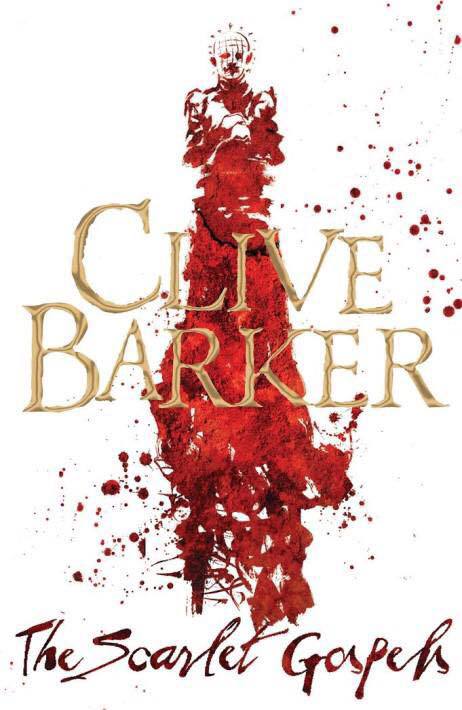
As a long time admirer of the aforementioned author, and a die-hard fan of the Hellraiser franchise—up to and including the stupidest sequels—I had high hopes for The Scarlet Gospels, which sees Clive Barker taking ownership of the High Priest of Pain for the first time since, I think, the first of the films.


If anything, my expectations were raised when, after something like a decade on the drawing board, The Scarlet Gospels saw the light of day this past May—and what do you know? It was relatively well received. Most of the reviews I perused were good going on great, so when I finally got around to reading Barker's first proper horror novel—excepting Mister B. Gone and the Abarat books—in nearly fifteen years, I was basically beside myself with excitement.

And you know what? That first chapter? Fucking. Fantastic. Classic Clive Barker.

But from there on out, I'm afraid, The Scarlet Gospels is "business as usual, at best." And the rest of the time, "it reads like an unsightly reminder of a writer past his prime."

Strange Horizons has my full review. Please do click on through.

Tuesday, 12 May 2015

The Scotsman Abroad | The Deleted Testament of Hal Duncan

Sorry it's been so long! I'll explain The Situation in a few days, I swear.

For the time being, as I'm sure some of you know by now, it was my pleasure yesterday to help tease Testament—the first novel to come from my fellow Scotsman Hal Duncan in damn near a decade—over on Tor.com.

Testament itself is a properly exciting prospect, but to tell the truth, anything that has to do with Hal has a special place in my heart. You must be wondering why. Well, I spent a wee while explaining exactly that in my first pass at the aforementioned article—though I realised the error of my ways before hitting submit on the thing, given that said section would surely be rather more relevant here on The Speculative Scotsman than on Tor.com. 

Without further ado, then—a deleted scene from The Testament of Hal Duncan:
It’s been damn near a decade since The Book of All Hours blew my tiny mind. 
I was still a student in 2005—of English literature, largely, alongside a spot of philosophy. As I recall, I was within sniffing distance of my degree, and well pleased to be, but by then I’d become so sick of my subjects that the prospect of never having to read anything else ever again had real appeal. 
Clearly, it wasn’t to be, because come the conclusion of my course, a couple of books broke through. These books—books like The Scar by China Mieville and City of Saints & Madmen by Jeff VanderMeer alongside Hal Duncan’s tremendous two-volume debut—opened my eyes to a whole new world of words. In short, it’s fair to say that Ink and Vellum helped made a speculative fiction devotee of me. 
Duncan has been pretty prolific as an author and as an editor in the short story scene since—see Fabbles the first, Scruffians! and Caledonia Dreamin’—and as my two year tenure as co-curator of the Short Fiction Spotlight shows, I hope, I’m a huge fan of the form.
But sometimes a novel is needful. Sometimes an author requires the room long-form fiction allows to thoroughly explore a theme or an idea. To wit, I’ve been watching Notes from New Sodom like a hawk, and in April, the aforementioned author teased something called Testament. I reached out to find out more about the project post-haste, and today, it’s my pleasure to tease you about Testament in turn.
Read the remainder of the reveal right here.

Rest assured, in the interim, that you and I will talk again shortly.

Monday, 27 April 2015

The Scotsman Abroad | Ascending the City of Stairs

As we speak, I find myself on a bit of a science fiction kick. On the back of Way Down Dark by James Smythe and Crashing Heaven by Al Robertson, I'm deep in Seveneves by Neal Stephenson, with Slow Bullets by Alasdair Reynolds, Nemesis Games by James S. A. Corey and Aurora by Kim Stanley Robinson coming up.

Far be it from me to moan! The first few of those books have been brilliant, and I have every reason to expect great things from the remainder. If I had my druthers, I'd be reading a bit of fantasy, a spot of horror and maybe a mite of crime between all that sf, but deadlines are deadlines, and that's fine.

Happily, the last fantasy novel I read for review was tremendous, too—apart from a somewhat sluggish start:
Building worlds is hard work: a self-evident statement which goes some way toward explaining why most authors make do with the mundane plane that has us all in its thrall. But putting the umpteen pieces of truly wonderful worlds together—worlds whose histories and mysteries resonate with readers and ring of authenticity despite the fact that they’ve been conjured whole-cloth—has to be harder by far. There’s no right way to do the deed, either, and the field is replete with wrong ‘uns. Some creators descend into tedious detail; others leave so much to the imagination that the foundation of the fiction that follows is fitful. Robert Jackson Bennett falls fleetingly afoul of the former problem in his first full-on fantasy; but I’ve got good news, too, in that the world, when it is built, is brilliant: the story of City of Stairs springs from Bennett’s setting, leading to a feeling of coherency, of completeness, that precious few fantasies can match. The narrative’s characters, too, are inextricably of the divided domain it describes. 
Imagine, if you will, a realm in which gods once walked among men: a Continent complete with a half-dozen different living divinities. No one can say with any certainty where they came from, or what they could possibly have wanted—only that each of the six built its own city, its own base of operations, and called upon its most fervent followers to further the divergent doctrines of their chosen one of choice.
Read the rest of my review of City of Stairs on Strange Horizons. You can and you should, too. It's a bloody good book—certainly the most satisfying fantasy I've laid eyes on since Smiler's Fair.

Thursday, 11 December 2014

You Tell Me | The Year's Best Books

I still struggle to believe it's 2014, never mind the end of the year, nearly, but I'm reliably informed that I'm wrong. Not for the first time, nor the last, naturally.

The end of the year has come to mean something new to me, in recent years. There's Santa, sure; the birthday of the baby Jesus, but of course; and a bit of a break—yay! In advance of all that, though, the end of the year has, since the dawn of The Speculative Scotsman, signified a period of comprehensive critical consideration.

To that end, I tend to keep a list: of all the books I've read, the movies I've seen, the video games I've played, and so on. I failed at that in 2014, for various reasons, so forgive me, folks, if I overlook more than I usually do when the time comes to tackle Top of the Scots.

Truth be told, I was hoping we could compare notes—to begin with, about some of the best books we've read this year. Let me start you all off with a bit I contributed to the recent Reviewers' Choice on Tor.com:
2014 has been a banner year for British science fiction, beginning with The Echo by James Smythe—an immensely upsetting sequel that doubled down on the awesome promise of its unsettling predecessor—continuing courtesy Claire North’s fantastic Life After Life-alike, The First Fifteen Lives of Harry August—a very different sort of novel than The Echo, yes, yet no less memorable—and concluding, because we’re already running out of room, by way of The Bone Clocks: the closest thing the man who came up with Cloud Atlas has written to a proper genre novel over the course of his career.
Reading through the other reviewers' recommendations, it's clear that I've completely failed at fantasy in 2014. I haven't read The Goblin Emperor by Katherine Addison, City of Stairs by Robert Jackson Bennett or The Mirror Empire by Kameron Hurley, though I sincerely mean to make time to catch up on those books over the break.


I feel much more up to speed on my science fiction. That said, All Those Vanished Engines by Paul Park managed to pass me by, and if ever a novel had my name on it...

Horror-wise... well. Here's where the lack of a list has really ruined me. I remember really liking the opening act of Revival by Stephen King, but it ended—spoiler warning—with giant evil ants, and gah all over that. To the best of my recollection, then, the only horror story that really stands out to me is the Southern Reach series by Jeff VanderMeer. Annihilation might just be the best book of the year, according to me. We'll see.

But please, you tell me: what have you read in 2014 that really rocked your socks?

Thursday, 21 August 2014

The Scotsman Abroad | Gone Goodreading

I'm sure this sounds counter-intuitive coming from a blogger, but social media and me, we... we have a somewhat strained relationship. It's true that I tweet; it's true, too, that that's been as much as I can manage—and sometimes, I'm crap at managing that. I'll either be tweeting all the time or not at all.

I'm just bad at balance.

Over the years, though, I've come to realise that community is crucial. Especially for a blogger based somewhere as out there—relative to the likes of London—as the boondocks of Scotland. So a week or so ago, an invite inspired me to give in to Goodreads. I signed up for an account, sent a few (hundred) friend requests and set about filling a bookshelf or two.


To my surprise, it's been a bunch of fun so far. I particularly enjoy having a place to put my immediate reactions to texts as they develop, and I figured a few of you might do too. So if you're interested in reading my ramblings about the books I'm reading right now—books you won't see reviews of on The Speculative Scotsman for some time, typically—feel free to friend me, folks: on Goodreads, or indeed on Twitter, Xbox Live, PSN, Steam and so on.

My username is always niallalot.

Perhaps one day I'll tell you why...

Wednesday, 13 August 2014

The Scotsman Abroad | The Afterparty At Last

Some time ago, I told you all how much I was looking forward to Daryl Gregory's new novel. Well, its release date in the UK is this week. At long last, the Afterparty is upon us!


Alas, I didn't love it. In my review for Strange Horizons, written around the time of Afterparty's publication in April Stateside, I commented as follows:
Taken together, The Parable of The Girl Who Died and Went to Hell, Not Necessarily in That Order, and The Sixth Sense twist at the back of the first chapter, when it dawns on us that Dr. Gloria is a pharmaceutical figment of Lyda's lively imagination, do a terrific job of eliciting interest—intrigue, even—in Afterparty, but what follows is, if not flat, then fairly familiar. Too soon, Gregory disposes of the doctor—she has a good Christian conscience, of course, so Lyda's abuse of Ollie bothers her—and in her absence, Afterparty becomes a more mundane chase-and-escape affair than the suggestive start of the book moots: it's revealed to be a thriller as opposed to a thinker, less Philip K. Dick than Lee Child or the like. 
It's a credit to Gregory that the going is engrossing in any event, in large part because of its pitch-perfect pace: a race to the finish line, in fact, between Lyda's lot and a cowboy contract killer called Vincent—pardon me: the Vincent (don't ask)—by way of a series of exciting set-pieces, such as the party's botched border crossing after an uncomfortably close encounter with an elderly Afghan drug distributor. 
On the back of Raising Stony Mayhall, I don't suppose it should come as a surprise that the author is more interested in character than narrative, but I found it harder to love Lyda than I did the eponymous zombie of Gregory's last novel, and Afterparty's plot, though perfectly paced, proved more pedestrian than that suggested by the promising premise.

Afterparty is a good book, to be sure, but here I'd been hoping for something superlative. Do yourself a favour and read Raising Stony Mayhall instead. Now that is an awesome novel.

Wednesday, 18 June 2014

The Scotsman Abroad | Rise of the Franchise

I don't know what it is about these things, but every time the fine folks at SF Signal ask me to take part in a Mind Meld, I end up banging on about Batman.


I guess I've got a decent excuse this afternoon. Here's the question James Aquilone posed to the panel:
DC reportedly has at least seven movies in development. Marvel has movies planned out to 2028. Star Wars kicks off a new trilogy next year and has at least two spinoffs already in development. Then there are the upcoming TV shows—Gotham, The Flash, Agent Carter, Daredevil... 
Is this too much of a good thing? Or a dream come true? Do you ever get sick of the constant movie news updates? What are your thoughts about the recent influx of shows and movies from these big franchises?
I took this open-ended question as an opportunity to talk about original ideas as opposed to established IP... albeit by way of franchise fatigue, finance, the overabundance of quality entertainment available to us today, and the forthcoming police procedural featuring baby Bruce:
Ideas are easy. If all it took to make a movie or greenlight a TV series was an awesome concept, we’d all be multimedia moguls, made of money—money we could pour into more original intellectual property, perhaps. But banking on original characters and shiny new narratives is, in the industry today, a dodgy bet at best. Better by far, financially, to latch on to an established franchise, which comes with interest built in; with a fanbase gagging to evangelise a few of their favourite things.
As I mentioned in the last Mind Mind I was asked to be a part of, I’m a longstanding Batman fan, so I’ll be watching Gotham in the autumn—for long enough, at least, to see if it’s for me. Would I if it lacked those connections? It’s not likely, no.
I love new experiences, in theory. In practice, alas, I’m more prepared to spend my minutes and my and my monies if I can try before I buy. So if there’s a problem, and I think there is, then I’m a part of it. I imagine most of us are. But we haven’t done anything wrong, really... or else, that’s what I tell myself.
Read the rest of my ramble right here, along with answers from a selection of other irregulars, including Douglas Cohen, Abby Goldsmith, Deanna Knippling, Derek Johnson, Lisa McCurrach, Melanie R. Meadors and Paul Cornell.

Monday, 24 February 2014

Coming Attractions | Speculative Fiction 2013

Indulge me a moment, dear readers.

Seeing my work alongside articles by the awesome authors and brilliant bloggers showcased in Speculative Fiction 2012 was a point of proper pride for me last year. Leafing through the contributor's copy I got—or maybe it was one of the ones I bought—I'm no less proud now.

More importantly for me, at least, the anthology legitimised, in others' eyes, what I spend my days and nights doing. No matter how many times I told my Mum what I was up to, it wasn't till she saw my name on a printed page that she realised I might not be the good-for-nothing lump she had imagined. I admit I may be overstating her former fears about me, but it's true, to be sure, that she's crowed about the book pretty much continuously since. Whenever I visit, she calls me her "writer in residence." 

An endlessly embarrassing business. But also... well. A little lovely.

It dawned on me this morning that there'll be no stopping her now. After all, the most estimable editors of the next iteration of the anthology recently revealed the cover of Speculative Fiction 2013, designed—as was the last one—by Sarah Anne Langton.


Our friendly neighborhood Book Smugglers, Ana Grilo and Thea James, who took the baton from last year's terrific team, also unveiled a list of contributors. The lineup this time around includes, but is not limited to:
Abigail Nussbaum, Aidan Moher, Alasdair Czyrnyj, Aliette de Bodard, Alyssa Franke, Amal El-Mohtar, Ana Silva, Ann Leckie, Annalee Newitz, Bodhisattva Chattopadhyay, Carrie Sessarego, Chaila, Cheryl Morgan, Chiusse, Chris Gerwel, Diane Dooley, E.M. Kokie, Emily Asher-Perrin, Erin Hoffman, Foz Meadows, Gavia Baker-Whitelaw, Jared Shurin, Jemmy, Jenny Kristine, Jim C. Hines, Joe Abercrombie, Jonathan McCalmont, Justin Landon, Kameron Hurley, Karyn Silverman, Kate Elliott, Leow Hui Min Annabeth, Liz Bourke, Mahvesh Murad, Matt Hilliard, Miguel Rodriguez, N.K. Jemisin, Natalie Luhrs, Niall Alexander, Nina Allan, Orem Chiel, Paul (Sparky), Phoebe North, Renay, Robert Berg, Sam Keeper, Sayantani DasGupta, Shaun Duke, Sophia McDougall, Stefan Raets and Tansy Rayner Roberts.
I was totally going to tell you which article Ana and Thea picked to represent my writing through 2013... before I realised how much more fun it'd be to let you guess.

I'll say that it's a review—which will surprise no-one, of course; by and large, for good or for ill, that's what I do these days—but also that it's a piece I'm particularly proud of. I'm doubly pleased to see a pair of my peers agree.

Time to post this puppy, but before I go, know that Speculative Fiction 2013 will be released in April. The listings aren't live on Amazon as yet, but as and when you're able to place your orders, remember that all the profits will be donated, as they were last year, to Room to Read: an awesome cause on top of the progressive premise this annual anthology evidences in any event.

Wednesday, 18 December 2013

Status Update | A Lion King Christmas

I don't know about you, but with Christmas day just a week away, I'm finally feeling festive.

Not least because last night I realised a dream more than a decade in the making, when the entirety of my family got together to attend a performance of The Lion King live. Simba's spotty performance did not ultimately undermine what was a wonderful show overall; a real visual feast that I'm so pleased to have seen.


I've been humming 'Be Prepared' ever since leaving the theatre, and this morning it occurred to me that I could do worse things in life than take Scar's advice.

Which is my way of saying that though I'm usually one of the very first folks to bang on about the year's best books — Top of the Scots has in the past happened in early December — in 2013 my other obligations have regrettably had to take precedence. I've had to stockpile columns, including this morning's edition of the British Genre Fiction Focus, and ready a fair few reviews to run on Tor.com over the holidays. Truth be told, I've been so busy in November and December to date that it only just hit me that Christmas is coming.

And you know what? I want to enjoy it, so instead of spending the few days remaining to me this year putting together Top of the Scots, I'm going to give myself over to the Christmas spirit. To wit, I warrant you won't be hearing a whole lot from me over the holidays, but when I do get back to blogging, it will be worth the wait. Scots honour!


For a sneak peek at a few of my favourites, check out the Tor.com Reviewers' Choice, in which I count down the three best British books I've read in 2013. I've contributed to another end of year feature as well: Strange Horizons has a few hundred words from me about the books I've gotten most lost in this year.

Now to lose myself in festive merriment...

You all have a brilliant Christmas, and a happy New Year, you hear?

Monday, 9 December 2013

The Scotsman Abroad | Smugglivus and the Future of Speculative Fiction

Today, it's my pleasure to point you all in the direction of a post I wrote recently that, in a turn up for the textbooks, wasn't for either The Speculative Scotsman or Tor.com.

We'll talk more about my plans for Top of the Scots 2013 in time, but rest assured that I have been devoting a lot of thought to the prospect of the blog going forward, not least how to handle our annual accounting of the best books and movies and video games of the previous year. 

Indeed, I've been thinking so seriously about these things that when I received an email from Ana and Thea about contributing for the third time in three years to their festive feature, I decided to do something a little different.


To wit, this morning on The Book Smugglers, an overview of the most exciting science fiction and fantasy forthcoming in 2014... according to me, at least:
Fantasy fans have Fall of Light to look forward to, the second volume of The Kharkanas Trilogy by Steven Erikson. The mighty mind behind Malazan also has another new novel on the cards — a spacefaring farce with the working title Willful Child — which brings us neatly to our next category: the science fiction of the future! 
The Echo by James Smythe will be the first such specimen to arrive. I’d had the pleasure of reading this one already, so I can say with certainty that it’s a fully realised sequel which takes what was great about The Explorer and makes it bigger, better, and still more momentous. Meanwhile a second Smythe is poised to be published in the UK in late May: No Harm Can Come to a Good Man is about something called ClearVista, a revolutionary new technology which purports to predict probabilities.
Please do pop on over to The Book Smugglers' blog to read the rest of the post, and if you like, let us know what you and yours are looking forward to reading next year.

And hey: hang around! Not just because Smugglivus is always a bunch of fun — though, you know, it is — but because this week alone there will be guest posts by some of the very finest of my fellow bloggers, including Jared of Pornokitsch, Stefan Raets of Far Beyond Reality, and Justin Landon of Staffer's Book Review

Good reading: guaranteed.

Thursday, 7 November 2013

The Scotsman Abroad | On Graham Joyce

Yesterday I received an email that brought both my partner and I to an absolute standstill.

We've both been reading Graham Joyce for years, you see; Memoirs of a Master Forger was my first of his works, whilst the other half has had a passion for his ghostly prose since The Silent Land. Invariably, one of us will manage to bagsy his new book before the other does, such that it's become something of a game between us.


So the news that he has cancer, that he nearly died six months or so ago... let's say it cast a dark cloud over the remains of the day. Per the press release I received:
Graham Joyce received a standing ovation at the 1,000-strong awards ceremony of the World Fantasy Convention in Brighton on Sunday 2nd November 2013. Picking up the Best Fantasy Novel Award for an unprecedented sixth time in his career, Joyce was earlier this year diagnosed with aggressive lymphoma cancer. The event marked his first public appearance since his diagnosis.
Joyce won the Best Fantasy Novel Award for Some Kind Of Fairy Tale, a story in which a young girl thought to have been abducted from the woodlands of the East Midlands returns to her family after twenty years. 
Six months ago Joyce had the experience of being revived by an emergency resuscitation team at the Leicester Royal Infirmary. Joyce said, “Just being able to stand here today is a wonderful award, thanks to the doctors and nurses of the NHS.”
Inadequate as it is, I can only express how happy I am that the doctors and nurses of the NHS managed to bring the man back, and how sorely I hope that he has many more years of good health ahead.

In any event, I've seen a fair few folks express curiosity about his work since the bad news broke, and I'd love for them to discover him as the other half and I have, so I thought I'd gather together links to the reviews I've written of his books.

Here's what I had to say about The Silent Land.

Here are my thoughts on the book he won the Best Fantasy Novel Award at the weekend for.


And to top it all off, my most recent article for Strange Horizons was a glowing review of his new novel, The Year of the Ladybird:
Almost forty years on, the scorching summer of 1976 is remembered by many; however the relative tenor of the tale depends upon the perspective of the teller, very much in the mode of local legend. Some speak of it as a bastion of all that is great about Britain... or all that was, once. Others recall the summer as a season of suffering; of water shortages, hellish heat, economic depression, and — what with the National Front nearing the peak of its power — political volatility. 
Each of these ideas has a part to play in Graham Joyce's new novel, but like the infamous insect invasion The Year of the Ladybird takes its evocative title from, they're in the background, by and large, adding if not narrative impact then immersive depth and telling texture to the text's redolent setting: a ramshackle holiday resort in a nation coming of age just as our protagonist David Barwise does over the course of this slight but delightful ghost story.
Graham Joyce is, in short, an awesome author: if you've been on the fence about his fiction, get the hell off it.

My thoughts, and my partner's, will be with him and his during this difficult time.

Wednesday, 11 September 2013

The Scotsman Abroad | Summiting Mount Mind Meld

A little while ago, I received an email from the esteemed Paul Weimer, wondering whether I'd be interested in participating in the latest Mind Meld he was putting together. It was an absolute honour to be asked, so of course I agreed immediately.

But what with everything else that's been going on in my neck of the woods in recent weeks, this past weekend was the first opportunity I had to work on my response, and as it happens, I had just caught a cold from the wicked children I tutor when I'm not silly busy reviewing books.


Determined not to disappoint, I managed to put a piece together in any event, and though I hardly remember writing it, seeing it on the Hugo Award-winning SF Signal this morning — alongside responses from Cheryl Morgan, Ian Sales, Anne Lyle, Lou Anders and a goodly number of others — I'm really rather pleased with how my first contribution to the Mind Meld turned out. It's as much a reflection on how I approach Mount To-be-read today as it is an accounting of the books that are in my bedside cabinet at the moment:
I warrant we all have our own ways of describing the groups of books we mean to read. Mount To-be-read works for me, but mostly because it suggests something more; something I can’t help but correlate with all the climbing I did as a kid. 
Maybe climbing isn’t the right way to describe the year-round hobby my dad and I had. Hillwalking was what we were about. Come rain or shine, sun or snow, my Munro Bagger of a father always had some summit in mind. 
Many climbs I quite liked. But there were others. Bog-ridden slogs. Hills that went on and on and on, only to end in anti-climax: a beautiful view obscured by overcast clouds, or a chance meeting with other people — and up there in the middle of nowhere, that tended to cheapen the experience. 
Part of the problem was that my dad was far fitter than I. Matter of fact, he still is — as evidenced by the last hill we walked. That is to say, we climb together to this day, though rather less often now than then. Then, I hardly had a lot of choice in the matter... thus there were times when I hated the hills. I hated how hard they were, how fleeting the feeling of overcoming one when the next was only ever a weekend away. 
Sound familiar?
I may repost my response in full here on The Speculative Scotsman at a later date, but a large part of the pleasure of the Mind Mend, for me at least — and I've been following the feature for years — is seeing how differently every participant responds to the selfsame question; how one response reflects and refracts the others around it.

So please, head on over to SF Signal and read today's most excellent Mind Meld in its entirety.

Thursday, 22 August 2013

The Scotsman Abroad | The Adjacency Effect

Horror of horrors: I've been without the internet for the last 48 hours!

Actually, aside the initial inconvenience, it's been a fine few days. I squeezed a whole hell of a lot of reading in, finished the superior third season of The Killing, played the final Dishonored DLC, and caught up on a few awesome comics.

It's amazing, the sheer quantity of stuff you can get done when you aren't distracted by emails and tweets and feeds and so on. If I'm honest, when I woke up this morning to see that they'd fixed things at the exchange, I was almost disappointed. Almost.


In any case, I've got an awful lot to catch up on before I'm back on track, so today, for your entertainment, let me point you elsewhere.
Seamless storytelling can sometimes seem like magic, but in The Adjacent, Christopher Priest goes to great lengths to stress the applied aspects of both practices: 
"What I do [...] is contrived to look like a series of miracles, but in reality the preparation of a magical illusion is a prosaic matter. Few people realise the amount of rehearsal conjurors have to put in, nor what goes on in the background. A trick often requires technical assistants, who will help design and build the apparatus. The movements a magician makes on stage are the result of long and patient rehearsal, while still having to look natural and spontaneous to the audience. It is an acquired practical skill, in other words. Only while in performance, in the glare of the limelight, can magic look like inspiration. Even at best it is never more than an illusion. Things are never what they seem." (p.86)
This is true of almost every facet of The Adjacent. Its narrative feels fairly straightforward at first, but the farther into the fold we go, the less linear and logical it looks. One tale turns into two, two into ten... ten threads or thereabouts, then, which contradict as often as complement one another, seeming to stand alone from the whole at the same time as suggesting some imperative collective resonance. Meanwhile, whatever motivations or expectations Priest's cast of characters either have or lack at the outset are quickly obliterated; annihilated on even the theoretical level by something uncomfortably akin to the Perturbative Adjacent Field proposed by Professor Thijs Rietvel.
You can read the rest of my review of The Adjacent over at Strange Horizons.

In short, it mightn't be the place for readers new to Christopher Priest to begin, but for those of us who've stuck with him through thick and thin, it's an astonishingly rewarding novel. In long... well, you know where to go.

Thursday, 25 April 2013

The Scotsman Abroad | Speculative Fiction 2012

You're probably sick and tired of hearing about Speculative Fiction 2012 already, but you know what? I'm not. I'll talk about this collection of formerly online criticism and insight till the cows come home.

Indeed I have done. It's given me something tangible to point people towards when explaining what I do on a daily basis; here, finally, is a physical thing that showcases why being a blogger is so meaningful to me. What I take from the community, and what I like to think I give to it.

Which is to say, by God, guys: I've been published! And look at the stunning company I seem to be keeping:
How do you write female characters with agency? What did J. R. R. Tolkien learn from Attila the Hun? What is it like to be a dragon? Is science fiction stuck in a rut? The Internet has the answers. Speculative Fiction 2012 collects over fifty articles from some of the top bloggers and authors in science fiction and fantasy, including over two dozen reviews. Contributors include Joe Abercrombie, Daniel Alexander, Kate Elliott, N. K. Jemisin, Aidan Moher, Abigail Nussbaum, Christopher Priest, Adam Roberts, Tansy Rayner Roberts, Sam Sykes and Lavie Tidhar.
That's the product description of the first edition of this awesome annual anthology on Amazon, and if you look closely, you'll see I've been hybridised with Daniel effing Abraham, who said of this obscenity yesterday: "If I have to be transporter-mushed with someone like a postmodern remake of The Fly, Niall will do just fine."

To which I can only add... likewise! But let's not with all the horrible vomiting.

Restraining myself from blogging about Speculative Fiction 2012 till today has been torture of the highest order, so I'm beside myself with excitement to finally get this thing out of my system.


In case you were wondering why I've waited, well, I'm a believer in timely buying advice rather than getting my reviewer's foot in first, and the collection only came out today. I can't recommend Speculative Fiction 2012 highly enough... not because I'm in it, or because it features many much better bloggers and authors that I, but because it serves in a very real sense to legitimise what we have here.

In closing, I'm going to hand it over to Jared and Justin of Pornokitsch and Staffer's Book Review respectively—the fine folks who took it upon themselves to produce this pièce de résistance:
Let’s be honest, no one takes us seriously. ‘Blogging’ is barely reviewing and certainly never ‘criticism’. We’re not paid, so we’re amateurs. We’re doing it for love, so we’re fans. Our opinions are merely our own, and not on behalf of a higher authority, like a newspaper or magazine. While our work sticks around, you’re only as good as your last post. And once something is off the front page, it might as well be gone forever... 
Speculative Fiction 2012 is meant to showcase the best of that passion. We’re not journalists, scholars or authors. Or, even if we are (we’re not), we’re contributing to the discussion because we love it. From our perspective, this kind of work deserves to be collected, immortalised, and substantiated. Literally.
If you'd like to buy a copy of the anthology, here's a link to the product page on Amazon.co.uk. If you're based in the USA, this is the link to click.

Whatever proceeds there are will go to Room to Read, so the more, the merrier.

One last thing before I bid you adieu: if you're interested in talking to some of the bloggers and authors behind the scenes of Speculative Fiction 2012, there's going to be an Ask Me Anything session on Reddit on May 2nd.

I don't really know what that means, but I'll try to figure it out before next Thursday. It's for a fantastic cause, after all. Literally.

Friday, 12 April 2013

The Scotsman Abroad | Marking the Clarkes

Three months in, I can only hope most of you are familiar with the British Genre Fiction Focus: the weekly column about news and new releases in the UK that I contribute to Tor.com.

The response to the series so far has been more positive than I could have imagined, but with every additional edition, I've wondered whether some of the more meaningful news stories I ruminate on each week wouldn't be better serviced in articles of their own.

Well, yesterday was something of an acid test in that respect. Yesterday, the first special feature from the British Genre Fiction Focus fold was posted, and luckily, I had a hell of subject to tackle: namely the recently released shortlist for the Arthur C. Clarke Award, especially the overwhelming presence of penises amongst the authors nominated.

Anyway, in Marking the Clarkes, I attempt to round up some of the most representative reactions to the alarming absence of women writers on the shortlist, before pitching in with my own several cents:
So was the reaction to this year’s shortlist basically a case of much ado about nothing? 
No, it wasn’t. Absolutely positively not. There’s a very real problem in play that the subsequent back-and-forth has brought to the fore, finally. But I’d echo the thought that this alarming lack of diversity [...] can be traced back to the publishing industry rather simply set at the doorstep of a panel of individuals with autonomous opinions who announced an inherently subjective shortlist. 
One last wrinkle before I let you folks work out where you stand and why: the publishing industry lives and dies by the same rules of supply and demand as any other commercial sector. Accusing the bigwigs and the buyers, then, is too easy an out. After all, they buy the books that they have reason to believe we’ll read. 
Who then to blame for this dangerous state of affairs but ourselves?
If I may be so bold, Marking the Clarkes makes for an interesting read in its own right, but the real conversation has occurred in the comments section, already almost thirty thoughts long and strong, and featuring a few words from Tom Hunter himself, director of the Arthur C. Clarke Awards.

All of which is to say, you should think about reading this thing. Chiming in, even.

Fingers crossed I see a few of you over there. Otherwise, we'll talk again shortly.

Wednesday, 13 February 2013

The Scotsman Abroad | Best of British

I promise not to keep banging on about this, but lest any of you conclude I blog more rarely these days than I did—when nothing could be further from the truth—let me point you once again in the direction of the two columns I contribute to Tor.com.

To begin with, the latest instalment of the British Genre Fiction Focus was unleashed earlier this afternoon. This week's news round-up begins with a discussion of the perfect storm ruining high street retail in the UK, vis-a-vis the new world order under which Waterstones now operates, and ends with... well. A bit of a silly story.

Choose your own erotic adventure, anyone? :D

Then, in the second section, there are a huge number of new releases to look forward to, not least new novels from Adrian Tchaikovsky, Jim Crace and Christopher Brookmyre—a Scotsman after my own heart!


You can read the rest of this week's edition of the BGFF here.

Meanwhile, Brit Mandelo and I have been swapping the Short Fiction Spotlight back and forth, and yesterday it was my turn to direct it again. Click through for my thoughts of the British Science Fiction Association's Best Short Shortlist, including much discussion of a pair of fantastic candidates: "Three Moments of an Explosion" by China Mieville and "Adrift on the Sea of Rains" by Ian Sales.

I'll be concluding the review in two weeks. Beyond that, though? I have a few thoughts about what authors to subject to the Spotlight, sure... but I'm open to ideas.

So: which short stories would you like to see featured in the Short Fiction Spotlight going forward?

Thursday, 31 January 2013

The Scotsman Abroad | Introducing the Short Fiction Spotlight

Yesterday was a big day for your resident Scotsman!

In addition to the third instalment of the British Genre Fiction Focus—wherein I touched on the rebranding of Guy Gavriel Kay in the UK, the impact of the cold snap we've had on high street retail, the rise of "artisan authors" via The Guardian, and the announcement of The Time Traveler's Almanac—yesterday also saw the debut of the other feature series I've been working on for Tor.com.

Wonderfully, this once I wasn't working alone, because the Short Fiction Spotlight is a team effort between myself and the brilliant Brit Mandelo. Both of our first editions hit the front page at the same time yesterday, but from here on out we'll be sharing the Spotlight equally, which is to say one week Brit will curate the column, and the next week I will; then her again, then me once more, and so on and so forth—for all time if it takes off.

Long story short—and isn't that the point?—the Short Fiction Spotlight is live, and I'd love it if you took a look.

Here's how my half the whole starts:
Much as we like to tell ourselves otherwise, size absolutely matters. 
What? I’m a shorty; I get to say these things! 
But I mean the size of stories, of course. There are no two ways about it, I’m afraid: whether because of price or presence, viability or visibility, short fiction is the person at the party we politely ignore, or outright rudely overlook. 
I’m as guilty of this telling offence as anyone. In the second installment of my ongoing British Genre Fiction Focus column, I talked up the British Science Fiction Association’s Best Novel nominees—amongst many and various other subjects—yet neglected to mention the six short stories up for one of the BSFA’s other awards. I am appropriately penitent, as we shall see, but this sort of treatment is simply all too typical of the short shrift short fiction is given.
In order to address the problem head on, Brit Mandelo and I will take turns discussing a selection of short stories. As we alternate weeks, Brit will be writing about magazines, primarily—whether physical or digital—meanwhile I’ll be going wherever the wind takes me. This week, for instance, in a timely attempt to correct my earlier oversight, I’ll be running through two of the six nominees for the BSFA’s Best Short Story award, and in subsequent editions of the Short Fiction Spotlight, time permitting, we’ll consider the remaining contenders together. 
After that? Well. I’m sure we’ll see... 
You are, of course, cordially invited to read along with us. We’d adore it if you did! And though not all of the shorts we mean to talk about in this column are available to read for free, where possible we’ll be providing links to the texts themselves, and failing that, advice on how to get hold of certain stories. If you keep watch on the comments, I’ll try to give you advance warning about what we’re reading next, as well.
I'm already hard at work on weeks two and three of this feature, and let me tell you, I've never read so many short stories in such a short space of time. Not in me tod!

Be they great or merely good—there certainly hasn't been a bad 'un in the bunch thus far—committing to co-curating the Short Fiction Spotlight has given me a glimpse in a whole other world of genre goodness, and I'd be over the bloody moon if did the same for a few of you.

So click through. Show your support for short fiction. And while you're at it, why not suggest a few choice stories for Brit or I to read and review?

Thursday, 17 January 2013

The Scotsman Abroad | The British Genre Fiction Focus Begins!

Today, I'm incredibly excited to unveil the inaugural edition of a series I've been working on, in secret, for weeks.

In short, the British Genre Fiction Focus is a column concerned with news and new releases in the UK that I'll be writing for Tor.com on a weekly basis, and the opening instalments are upon us.


Once you've finished with the introduction - wherein I sing the praises of speculative fiction in Britain, state my mandate, and, as ever, bemoan the hellish weather - you might also like to take a look at the first edition of the feature for serious.

Here's a titbit from it:
Whether I’m loving a novel or loathing it wholly, finishing a thing is singularly exhilarating.

Perhaps you’re wondering why I would say that. The easy answer is because afterwards, I get to start a new story, but the intervening period is worth its weight as well. This is a time of awesome possibility. Of truly immeasurable potential. Almost anything could happen in that magical moment, and even if the book I eventually resolve to read is rubbish, that doesn't detract from the thrill of the decision.

But picking isn't easy, is it? Sure, some recent releases demand our immediate attention. Mostly, though—for me at least—there are simply so many exciting options that I can spend as long settling on one novel over all the others as it takes me to read it.

Have you ever struggled similarly? Well, this column certainly isn't going to help any!

In fact, it is my sincerest dream that the British Genre Fiction Focus will make these decisions still more difficult, because of course there are other worlds than those we know. However widely read we may be, there are other authors... other novels... and other issues to consider. 
To wit, this column exists to fill a hole we noticed in our coverage of all things weird and wonderful: news and new releases from the British genre fiction industry 
[...] 
So what do I have for you in the first edition of Tor.com’s edifying new feature? Well, fittingly, the British Genre Fiction Focus begins with news of a new genre fiction imprint, a new trilogy, two new covers and a whole new way of doing business.  
"That’s in addition to discussion of an excellent selection of promising new novels—including a previously self-published sensation, a standalone scientific romance with the DNA of the weird, and the belated beginning of an epic fantasy saga that’s done very well for itself in North America—all of which will be released in the UK this week."
I had a simply terrific time putting together the inaugural instalment of the British Genre Fiction Focus, and I'm already rounding up news for next week's edition, and thinking about which new releases might make the cut. However, there's nothing hard or fast about the feature at this stage: in fact I would welcome any and all comments about form or content.

But say you don't have any constructive criticism to make. Well... great! It's early doors, of course, but this new column is all about the conversation, so whether you want to ask for clarification or more information, profess your undying adoration for a particular author, or take me to task about something silly I've said, please... feel free.


I'd encourage you to send in tips, too. I'll certainly try to stay on top of the biggest developments in my fair nation's speculative fiction industry, and attempt to keep tabs on the UK's most notable new books, but alas, I am only one man.

Hard to believe, but I've been reviewing books for Tor.com for nearly two years now. That said, this marks the first time I've committed to contributing something of such magnitude, so I would be massively obliged if you could show your support in some way for the British Genre Fiction Focus.

Thanks in advance! :)

Tuesday, 8 January 2013

The Scotsman Abroad | Dear Year in Review

How's it going, folks?

I'm still in Skye, so forgive the relatively short blog. Hard to believe, but internet access is a precious commodity here, even in the year 2013: I've had to camp out in a WiFi-friendly pub in Portree, complete with a pint of Dark Island and my massive laptop. Fair to say, then, that I look a little conspicuous - there isn't even a smartphone in sight - so I'll keep this quick.

Last week, Strange Horizons' published their round-up of the Year in Review, and I wanted to direct you all towards it. This is the third time I've contributed to the feature, I believe, and as ever, the invite was an absolute highlight.

So what did I do with my 250 words?

Well, given the genre of the books I reviewed for Strange Horizons in 2012, I decided to focus on horror and dark fantasy fiction. Firstly, I burbled about The Drowning Girl: A Memoir - I'll toot my horn about that text any chance I get - but I couldn't very well discuss the year in all things creepy and/or crawly without making mention of season one of The Walking Dead, the incredible episodic entity I named my favourite game of 2012.


Thanks to the alphabet, my contribution comes first, but I implore you to read on for a paragraph or two from a who's-who of the site's most insightful critics. To see my work next to theirs - especially without an asterisk denoting I don't belong amongst such upstanding company - is an astonishing honour.

A brief word of warning: if it's anything like mine, your wallet simply can't handle all this awesome. By all means read the article anyway — just be prepared to seriously consider a new credit card after.

I've been nursing this ale for altogether too long already, so I'd best be off, but we'll talk again on the other side of what's been a deeply geeky holiday!

Back to Dungeons & Dragons and The Grim Company I go. :D