Showing posts with label horror. Show all posts

Thursday, 16 November 2017

Book Review | Strange Weather by Joe Hill


One autumnal day in Boulder, Colorado, the clouds open up in a downpour of nails, splinters of bright crystal that tear apart anyone who isn't safely under cover. 'Rain' explores this escalating apocalyptic event, as clouds of nails spread out across the country and the world. Amidst the chaos, a girl studying law enforcement takes it upon herself to resolve a series of almost trivial mysteries... apparently harmless puzzles that turn out to have lethal answers.

In 'Loaded' a mall security guard heroically stops a mass shooting and becomes a hero to the modern gun movement. Under the hot glare of the spotlights, though, his story begins to unravel, taking his sanity with it...

'Snapshot, 1988' tells the story of an kid in Silicon Valley who finds himself threatened by The Phoenician, a tattooed thug who possesses a Polaroid that can steal memories...

And in 'Aloft' a young man takes to the skies to experience parachuting for the first time... and winds up a castaway on an impossibly solid cloud, a Prospero's island of roiling vapour that seems animated by a mind of its own.

***

"After writing a couple seven-hundred-page novels back-to-back," Joe Hill has it in the afterword to his electric new collection, "it felt particularly important to get lean and mean," (p.436) and Strange Weather is exactly that: it's not long, and damn it, it's nasty.

A striking selection of novellas ranging from the playfully apocalyptic to the wickedly political, Strange Weather starts with an actual flash in 'Snapshot,' the unsettling story of a boy who crosses paths with a man in possession of a magical camera. This old Polaroid captures more than just those Kodak moments, of course: it captures the very memories of those moments, in sum leaving its subjects with holes in their souls.

Michael Figlione is just a kid when 'Snapshot' begins, so when he sees his old babysitter Shelly Beukes walking around the street they share, barefoot and swearing, he assumes she's simply senile. As a decent human being he does the decent thing and takes her home to her husband, who gives Michael ten bucks for his trouble. It's only when he goes to the local truck stop to spend his earnings and sees a creepy guy pointing a camera like a pistol that Shelly's seemingly insane story—about a man who's been stealing her essential self, picture by painful picture—starts to make sense.

Gripped by this suspicion, Michael stands guard over a sleeping Shelly later that same day, determined to catch the so-called Polaroid Man in the act. And he does, ultimately. But the story doesn't end there... though I rather wish it had. Economical in its narrative and affecting in its Stranger Things-esque setting, the first half of 'Snapshot' is stunningly done; sadly, the second section struck me as superfluous: slow and unfocused except insofar as it speaks to the themes at the centre of Strange Weather.

There is, to be sure, some seriously weird weather in this collection: between the storm that rages on as Michael confronts Shelly's tormentor in 'Snapshot,' the cyclonic blaze that looks likely to raze the town where the next tale takes place, the custardy cumulus the lovelorn protagonist of 'Aloft' lands on and the razor-sharp rain that gives Strange Weather's final fiction its name, the pathetic fallacy is in full effect in all four stories. But in terms of connective tissue, another, markedly more meaningful motif pervades these pieces: the struggle to let go of what we've lost.

What Shelly has lost is obvious; what Michael loses, less so. George Kellaway, the accidental hero at the heart of 'Loaded'—a straight story suggestive of the Sandy Hook Elementary School shooting in December of 2012—has lost his family. The restraining order his wife has taken out against him means he's also had to sacrifice his right to bear arms. But he still has a gun, by gum! A gun he's horribly happy to use when a woman who's been abused by her boss opens fire in the middle of the mall where Kellaway works.

Bodies promptly drop, including those of a Muslim woman and the bundled-up baby Kellaway mistook for a bomb—not to mention the only other witness to the incident. That guy gets one in the head as well, because otherwise, Kellaway would be in a whole bunch of trouble. As is, he has a good story to tell the first proper responders; a tale as tall as time that leads people to believe he saved the day instead of devastating it.

Celebrated as a hero by the media-savvy mayor, Kellaway is soon sitting for interviews, and starting to hope that not only will he get away with multiple murder, perhaps he'll even get his family back. But as the irregularities in his account start to surface, things take a terrible turn. "Kellaway felt like a bullet in a gun himself, felt charged and ready to go off, to fly towards some final, forceful impact. Loaded with the potential to blow a hole in what everyone thought they knew about him." (p.161) He does just that in a conclusion so unbearably brutal that it chills me still.

It's a shock to the system when Strange Weather's darkest story segues into its slightest and lightest, 'Aloft,' which follows a fellow on his first skydive. He isn't your everyday daredevil, however. "Aubrey has always been scared of heights. It was a good question, why a man with a dread of heights, a man who avoided flying whenever he could, would agree to jump from an airplane. The answer, of course, was maddeningly simple: Harriet." (p.254)

Harriet is "the girl [Aubrey] wanted as he'd never wanted anyone else," (p.300) and as the dismaying details of the pair's relationship to date are doled out, readers will realise that 'Aloft' is their story. Their story just so happens to wrapped around a particularly peculiar premise. You see, Aubrey doesn't make landfall with the love of his unlucky life. Instead, his dive terminates early when he loses his parachute on a semi-solid cloud that looks and feels like it's made of "acre after acre of mashed potato." (p.301) Stranded on this desert island of sorts, he must to come to terms with his feelings for Harriet, and her feelings for him, if he's to have any hope of touching terra firma again.

That 'Aloft' is the most whimsical of Strange Weather's four stories is fitting, considering it was written in the back of a notebook containing the finale of The Fireman basically because Hill hated "to see so much paper go to waste." But, as the author himself explains, it was 'Rain,' the collection's closer, that "arose from a desire to spoof myself and my own sprawling end of the world novel." (p.436)

'Rain' really is rather a lot of fun, particularly as it pertains to the White House's comments on the catastrophic change in climate that results in a hail of nails:
The operating theory—lacking any other credible explanation—was terrorism. The president had disappeared to a secure location but had responded with the full force of his Twitter account. He posted: "OUR ENEMIES DON'T KNOW WHAT THEY STARTED! PAYBACK IS A BITCH!!! #DENVER #COLORADO #AMERICA!!" The vice president had promised to pray as hard as he could for the survivors and the dead; he pledged to stay on his knees all day and all night long. It was reassuring to know that our national leaders were using all the resources at their disposal to help the desperate: social media and Jesus. (p.348)
It's a testament to Hill's not insignificant abilities that even here, in the midst of this rather ridiculous apocalypse, there remains resonance. Its protagonist, one Honeysuckle Speck, is haunted by the loss of her sweetheart, who was one of the first to fall victim to the disastrous downpour. Unable to accept Yolanda's death, she determines to deliver the news to her other half's father, which means navigating a stretch of highway that showcases the slippery grip civilisation has on society. Turns out all it takes to cause a collapse is—snap!—some strange weather.

I found the conclusion of 'Rain' is a touch too tidy; similarly, 'Snapshot' suffers from this occasional proclivity of Hill's, this inclination to offer answers to unasked questions. It's telling that 'Aloft' and 'Loaded' are Strange Weather's strongest stories: their ambiguous endings allow them to live past their last pages. That one is wacky and wonderful while the other's twisted tragedy proves all too easy to believe evidences the tremendous diversity of this collection. If NOS4A2 and The Fireman were Hill's Salem's Lot and The Stand, then this, dear readers, is his Different Seasons: a demonstration of his range and readiness to tell the hell out of any tale, be it supernatural or straight, silly or completely serious.

***

Strange Weather
by Joe Hill

UK Publication: November 2017, Gollancz
US Publication: October 2017, William Morrow

Buy this book from


Recommended and Related Reading

Tuesday, 13 December 2016

Book Review | Five Stories High ed. by Jonathan Oliver


Irongrove Lodge—a building with history; the very bricks and grounds imbued with the stories of those who have walked these corridors, lived in these rooms. These are the tales of an extraordinary house, a place that straddles our world and whatever lies beyond; a place that some are desperate to discover, and others to flee. At one time an asylum, at another a care home, sometimes simply a home.

The residents of Irongrove Lodge will learn that this house will change them, that the stories told here never go away. Of all who enter, only some will leave.

Multi-award-winning editor Jonathan Oliver has brought together five extraordinary writers to open the doors, revealing ghosts both past and present in a collection as intriguing as it is terrifying. Along with a linking narrative, this collection features five novellas by Nina Allan, Tade Thompson, K. J. Parker, Robert Shearman and Sarah Lotz.

***

The latest in a lengthening line of excellent collections edited by Jonathan Oliver, Five Stories High finds several of speculative fiction's best and brightest riffing on the same literary instrument: the haunted house. Not just any old haunted house, either, but one—Irongrove Lodge—shared by every player:
The house, like its surroundings, seemed quietly respectable, the largest and most prominent among a number of Georgian properties in the vicinity, flanked on one side by a ruddy-faced Victorian terrace, on the other by a 1930s mansion block built from the familiar yellow-grey London stock. [...] I could not rid myself of the idea that the house had, in some peculiar way, itself created the ramshackle and disparate landscape that now surrounded it, drawn the cloak of modern London securely about itself, to conceal its true purpose.
The particulars of its true purpose differ dramatically depending on which of the five authors involved in Five Stories High you ask, but although Nina Allan, K. J. Parker, Tade Thompson, Robert Shearman and Sarah Lotz diverge on the details, all agree that Irongrove Lodge is a home most hellish.

The aforementioned anthology puts its best foot forward by way of Nina Allan's 'Maggots,' the longest of the five works of fiction featured, and the least traditional. Herein, the writer of The Race follows a boy who becomes convinced that one of his relatives has been replaced:
On the 23rd October 1992, my aunt, Claire Bounsell, nee Wilton, briefly went missing in York during a weekend anniversary trip with her husband David. She reappeared again just minutes later, apparently unharmed. My aunt and uncle came home to Knutsford and went on with their lives. The incident has been mainly forgotten, but the person living as Claire Bounsell is not my aunt. She looks like my aunt, she speaks like my aunt. She has my aunt's memories and to any outside observer it would be impossible to tell the difference between my aunt and her replacement. No one, including her husband, family and twin children, appears to have noticed that anything is wrong. And yet there is no doubt in my mind that my aunt has been replaced by an impostor.
Whether Willy's conviction that Claire isn't herself—that she is, in fact, no more than a maggot—is symptomatic of a sickness of sorts or not, it dogs our narrator for ages. It ruins his first real relationship; it makes a decade of Christmases difficult; and going forward, it's foundation of a fascination that hounds him from the family home into the workplace and leads him, at the last, to Irongrove Lodge, where he'll have answers, if he wants them—albeit at an awful cost.

Sensitive yet unsettling, Allan's superlative story of simulation, of someone pretending to be someone else, is seamlessly succeeded by K. J. Parker's 'Priest Hole,' in which a shapeshifter living in Irongrove Lodge does whatever he can to get by following the loss of the lady he loved.

Thursday, 8 December 2016

Book Review | Normal by Warren Ellis


There are two types of people who think professionally about the future: foresight strategists are civil futurists who think about geoengineering and smart cities and ways to evade Our Coming Doom; strategic forecasters are spook futurists, who think about geopolitical upheaval and drone warfare and ways to prepare clients for Our Coming Doom. The former are paid by nonprofits and charities, the latter by global security groups and corporate think tanks.

For both types, if you're good at it, and you spend your days and nights doing it, then it's something you can't do for long. Depression sets in. Mental illness festers. And if the abyss gaze takes hold there's only one place to recover: Normal Head, in the wilds of Oregon, within the secure perimeter of an experimental forest.

When Adam Dearden, a foresight strategist, arrives at Normal Head, he is desperate to unplug and be immersed in sylvan silence. But then a patient goes missing from his locked bedroom, leaving nothing but a pile of insects in his wake. A staff investigation ensues; surveillance becomes total. As the mystery of the disappeared man unravels in Warren Ellis's Normal, Adam uncovers a conspiracy that calls into question the core principles of how and why we think about the future--and the past, and thenow.

***

For all our whistle-blowing and brainstorming, for all our back-slapping and activist hacking, for all the awareness we've raised and for all the progress we've made—for all that, it's not going well, the world.

That, at least, is what Adam Dearden believes, and, as a futurist who's resided on both sides of the aisle, he should know. Knowing what he knows, though, doesn't mean he can do a damn thing about it. That frustration recently reached fever-pitch for him when, whilst working in Windhoek, he saw something he shouldn't have seen; something that sent him over the proverbial edge.
He was a futurist. [He] gazed into the abyss for a living. Do it long enough, and the abyss would gaze back into you. If the abyss did that for long enough, the people who paid you for your eyes would send you to Normal Head. The place was paid for by foundations and multinationals alike, together. Most of their human probes needed it, one way or another, in the end. His first thought, in fact, that night in Windhoek, was that he was going to end up in Normal if he couldn't keep his shit together. (p.16)
He couldn't, of course.

Built "on the bones of a town founded by a madman whose last recorded words were about its terrible lights," (p.12) Normal Head Research Station is a sanctuary of sorts for screwed-up spooks and strategists and such. There, anything that could coax out their crazy is contained: mobile phones are a no-no, social media is strictly prohibited, and you can only access the internet if you've demonstrated yourself relatively sensible.

Which leaves... what? Well, there are a few DVD box-sets to watch, a bundle of board games to play, I dare say, and acres of ancient forest to get lost in. Your only real responsibility, when you've been sent to Normal Head, is to get better—if only so you can go back to gazing into that infinite abyss. And Adam Dearden does want to get better. Alas, within hours of his arrival, he witnesses something that beggars belief; something so unsettling that it puts him in mind of the riot that was his ruination rather than the road to recovery.

Tuesday, 15 November 2016

Book Review | Thin Air by Michelle Paver


The Himalayas, 1935.

Kangchenjunga. Third-highest peak on earth. Greatest killer of them all.

Five Englishmen set off from Darjeeling, determined to conquer the sacred summit. But courage can only take them so far—and the mountain is not their only foe.

As the wind dies, the dread grows. Mountain sickness. The horrors of extreme altitude. A past that will not stay buried.

And sometimes, the truth does not set you free.

***

It was on the back of the award-winning, six-part Chronicles of Ancient Darkness that Michelle Paver put out Dark Matter. A ghost story inspired by her lifelong love of the Arctic, it attracted flattering comparisons to the work of such giants of the genre as M. R. James and Susan Hill, and became, before long, a bona fide bestseller.

That the author has now turned her hand to another tale in the same vise-like vein can hardly be seen as surprising; what can is the fact that it's taken her six years and another complete children's series, namely the Gods and Warriors novels. But given the strength of Thin Air, a short, stirring and altogether masterful narrative set on the sheer slopes of the world's third-highest hill, if it takes another decade for Paver to perfect its successor, that's a decade I'll be willing to wait.

It's 1935, and mountaineering has the nation by the nape. Our protagonist Stephen Pearce has always been a keen climber, but he certainly wasn't supposed to be conquering Kangchenjunga this spring. He was meant to be getting married and starting a family, but something about the life he could see stretched out ahead of him—and the death, yes—didn't feel quite right, so when his big brother Kits basically begged him to follow in the footsteps of Edmund Lyell on an expedition up one of the Himalaya's highest peaks, Stephen said yes.

Yet Kits' request wasn't exactly selfless. He needed a medic for the expedition to go ahead, and if securing one meant upending his younger sibling's entire existence, then that was a price Kits was only too happy to pay to win the day. As Stephen reasons:
I know my brother. A couple of years ago, someone came upon Irvine's ice axe on Everest's north-west ridge, and Kits sulked for weeks. Why wasn't he the one to find it and get all the glory? That's what he's after now: relics of the Lyell Expedition; and a chance to complete what the great man began, by being the first in the world to conquer an eight thousand-metre peak—with the added lustre of planting the Union Jack on the summit, and beating the bloody Germans. (p.19)
Brothers they may be, but Stephen and Kits haven't always—or even often—gotten on, and for all that they're on their best behaviour at the outset of the trek, as the weather closes in and things threaten to get grim, the tension between them fairly flares.

Monday, 10 October 2016

Book Review | The Warren by Brian Evenson


X doesn't have a name. He thought he had one or many but that might be the result of the failing memories of the personalities imprinted within him. Or maybe he really is called X.

He's also not as human as he believes himself to be.

But when he discovers the existence of another—above ground, outside the protection of the Warren—X must learn what it means to be human, or face the destruction of their two species.

***

Area X meets Duncan Jones' first and finest movie Moon in a marvellously mystifying novella that wants to know what it means to be human in a world where people can be constructed like sculptures shaped from clay.

X is one such person; the last in a line of such people, even, although almost all of his predecessors, helpfully arranged alphabetically, persist within him. "X was the most recent, the closest to the surface; there was nobody beyond him. And yet he was folded in on himself, damaged." (p.55) Being more metaphysical than physiological, that damage is on display from word one of The Warren, which purports to be a record—though it is far from reliable—of X's pitiable existence:
I am writing on paper because I have seen the way that sectors of the monitor and other recording devices can become corrupted and whole selves, as a result, are lost. I am trying to leave behind a record that will survive. Apparently, judging from the passages that I do not remember but which are nonetheless written, I am not the only part of me writing this. (p.18)
Never mind for the moment our protagonist's matter of fact manner. Clearly, "something is quite wrong," (p.62) and that something has to do with the many competing personalities X carries, at least one of which is unwilling to lie back and think of Britain. "I am working against myself," it dawns on X on the day when he wakes halfway out of the Warren. "There are parts of me ready to betray me, and I no longer have clear control over them, particularly when I sleep." (p.38)

Tuesday, 20 September 2016

Book Review | The Kind Folk by Ramsey Campbell


Luke Arnold is a successful stage comedian who, with his partner Sophie Drew, is about to have their first child. Their life seems ideal and Luke feels that true happiness is finally within his grasp.

This wasn't always the case. Growing up in a loving but dysfunctional family, Luke was a lonely little boy who never felt that he belonged. While his parents adored him, the whole family knew that due to a mix-up at the hospital, Luke wasn't their biological child. His parents did the best they could to make the lad feel special. But it was his beloved uncle Terence who Luke felt most close to, a man who enchanted (and frightened) the lad with tales of the other—eldritch beings, hedge folks, and other fables of Celtic myth.

When Terence dies in a freak accident, Luke suddenly begins to learn how little he really knew his uncle. How serious was Terence about the magic in his tales? Why did he travel so widely by himself after Luke was born, and what was he looking for? Soon Luke will have to confront forces that may be older than the world in order to save his unborn child.

***

In everything we do, every decision we make and every action we undertake, our identities define us... yet we never really know who we are. We know who we were—we tell ourselves we do, to be sure—but like all memories, these recollections lose their sharpness with time, and, invariably, some of their truth, too. And while we think we know who we will be, these are projections at best; messy guesses subject to sudden and surprising changes in circumstance.

Take Luke Arnold, the central perspective of The Kind Folk by Ramsey Campbell. He thought he was the only son of Maurice and Freda Arnold, but as a DNA test taken on television demonstrates, he's not; the hospital must have given the couple he calls mum and dad the wrong baby. "He still has all his memories; nothing has changed them or what he is, let alone the people who are still his parents in surely every way that counts." (p.19) Nevertheless, this sensational revelation alters Luke's perception of his past, and that, in turn, has huge ramifications on his future.

Who, then, is the man caught in the middle?

Not who—or what—you might imagine, actually...

A father-to-be, in the first, because Luke's wife, the singer/songwriter Sophie Drew, is expecting. And although the doctors at the hospital give clean bills of health to both of the prospective parents, they take Luke to one side to say that it would be "in the interest of your child to discover what you can about your origins." (p.73) Origins that, try as he might to divine them in the subsequent months, don't seem to be entirely natural in nature.

It just so happens he already has an inkling as to where else he could conceivably have come from, because as a boy, he was haunted by bad dreams, imaginary companions and a compulsion to twist the fingers of his hands into shapes seen by some as satanic. The child psychologist little Luke saw all those years ago thought this was the fault of Luke's beloved uncle, Terence, and his tales of the Kind Folk.

Tuesday, 23 August 2016

Book Review | I Am Providence by Nick Mamatas


For fans of legendary pulp author H. P. Lovecraft, there is nothing bigger than the annual Providence-based convention the Summer Tentacular. Horror writer Colleen Danzig doesn’t know what to expect when she arrives, but is unsettled to find that among the hobnobbing between scholars and literary critics are a group of real freaks: book collectors looking for volumes bound in human skin, and true believers claiming the power to summon the Elder God Cthulhu, one of their idol’s most horrific fictional creations, before the weekend is out.

Colleen’s trip spirals into a nightmare when her roommate for the weekend, an obnoxious novelist known as Panossian, turns up dead, his face neatly removed. What’s more unsettling is that, in the aftermath of the murder, there is little concern among the convention goers. The Summer Tentacular continues uninterrupted, except by a few bumbling police.

Everyone at the convention is a possible suspect, but only Colleen seems to show any interest in solving the murder. So she delves deep into the darkness, where occult truths have been lurking since the beginning of time. A darkness where Panossian is waiting, spending a lot of time thinking about Colleen, narrating a new Lovecraftian tale that could very well spell her doom.

***

Ahead of Ian McEwan's literary nasty Nutshell, a fable of infidelity readers will only be able to experience from the perspective of a foetus, I Am Providence proffers a murder mystery narrated in no small part by the victim of that very vicious killing in the moments before his failing brain cracks and crumbles like "a sponge drying in the sun." (p.162)

Panos Panossian is an utterly insufferable author of Lovecraftian lore, so it's either fitting or simply suspicious that he meets his maker on the first day of the annual Summer Tentacular. "Providence's premiere literary conference about pulp-writer, racist, and weirdo Howard Phillips Lovecraft" (p.1) features, funnily enough, "a veritable 'Who's That?' of horror fiction," (p.30) including one Colleen Danzig. A newcomer to mythos mania with just a few short stories to her name, she was set to share a room with Panossian, but when the con goes on despite his death, Colleen decides to determine just whodunnit. After all, "if anything is possible, then yes, an untrained writer could find a murderer." (p.173)

Not just a murderer, but a mutilator too, because to add insult to injury, the killer, whoever he or she may be, purloined poor Panossian's face in addition to his future...

Singularly sickening as the murder this mystery revolves around is, if the truth be told, there's no shortage of suspects in Nick Mamatas' scathing portrayal of Lovecraftian fandom:
The Tentacular was a strangely aggressive environment—writers jockeying for position, people bellowing at one another, men sneering at women out of some abject simultaneous attraction and repulsion. It was high school all over again, except that all the kids with a measure of social intelligence were at the homecoming dance and the kids left behind were the meatheads, glue-sniffers, nerds, and minor league bullies. Geeks who liked to show off their knowledge of esoteric subjects, the more repulsive, the better. (p.74)
That last—"the more repulsive, the better"—may well have been Mamatas' mantra whilst working on I Am Providence, because it is, if not a horrid novel, then a novel of horridness. Almost all of its characters are creeps, not least Colleen, who is so cavalier and careless in her pursuit of the truth that she points the finger at pretty much everyone she meets, such that it's no wonder she hasn't made a great many friends by the end.

Thursday, 18 August 2016

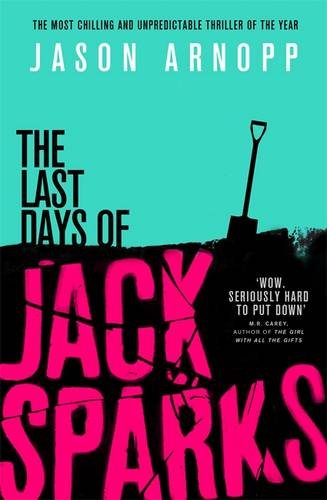
Book Review | The Last Days of Jack Sparks by Jason Arnopp


Jack Sparks died while writing this book.

It was no secret that journalist Jack Sparks had been researching the occult for his new book. No stranger to controversy, he'd already triggered a furious Twitter storm by mocking an exorcism he witnessed. Then there was that video: forty seconds of chilling footage that Jack repeatedly claimed was not of his making, yet was posted from his own YouTube account. 

Nobody knew what happened to Jack in the days that followed—until now.

***

If Hunter S. Thompson had written a Blair Witch tie-in, it might have looked a little something like this. A gonzo ghost story that trades in unreliable narration and drug-fuelled devastation, The Last Days of Jack Sparks marks the original fiction debut of music journalist and now novelist Jason Arnopp, and has as its central character a man who made his name writing for the NME before properly letting loose in a few bestselling books.

That's where the similarities between the author and the authored end, however. I have reason to believe that Jason Arnopp is a genuinely decent human being, whereas Jack Sparks is an egotistical twit who, for his first trick, travelled the length and breadth of Great Britain on a pogo stick, offending everyone he encountered equally. Since then, he's gobbled up gang culture and gotten close to a couple of Class A chemical concoctions, with similarly repugnant results.

Now, for his new novel, he's set his sights on a Halloween theme. Could ghosts really be real? Our intrepid reporter wants to know. So much so that Jack Sparks on the Supernatural will be his last book, because he died, quite violently, while writing it.

We learn this thanks to Jack Sparks' estranged brother Alastair, who footnotes and provides a foreword for the first draft of the found fiction that follows:
The decision to publish Jack Sparks on the Supernatural in its entirely uncensored form was in no way taken lightly, and I know how very difficult it is for the bereaved to read accounts of such horrendous events. Yet I also hope this book may yield some form of closure and put an end to unhelpful internet speculation—not least concerning the nature of my brother's death. (p.8)
Be warned, though, that Alastair's intentions might not be so wholly noble. "Believe me," he begs—but why should we? There's something defensive, dare I say desperate, about his abrupt introduction. And not long later, we learn that he and his brother weren't even on speaking terms towards the end of Jack's tenure. Might Alastair have an axe of his own to grind?

Jack indubitably does. He's a man on a mission at the outset of his ultimate effort: not to find evidence of things that go bump in the night, but to disprove every indication that they may. To wit, he sits in on an exorcism in Italy; laughs out loud as he live-tweets it, even. What he sees that day is hard to explain away, but Jack is determined to do so, or die trying.

Monday, 11 July 2016

Book Review | The Hatching by Ezekiel Boone


Deep in the jungle of Peru, a black, skittering mass devours an American tourist party whole. FBI agent Mike Rich investigates a fatal plane crash in Minneapolis and makes a gruesome discovery. Unusual seismic patterns register in a Indian earthquake lab, confounding the scientists there. The Chinese government "accidentally" drops a nuclear bomb in an isolated region of its own country. The first female president of the United States is summoned to an emergency briefing. And all of these events are connected.

As panic begins to sweep the globe, a mysterious package from South America arrives at Melanie Guyer's Washington laboratory. The unusual egg inside begins to crack. A virulent ancient species, long dormant, is now very much awake. But this is only the beginning of our end...

***

In recent years, apocalyptic fiction has gotten pretty political. Where once it was the preserve of the firmly fantastical or the nominally natural, like the rampaging rats of James Herbert's unforgettable first novel, or Michael Crichton's reconditioned dinosaurs, such stories have since taken a turn for the topical. Now we have nuclear winters to worry about, a cache of climate catastrophes, and the release of diseases genetically engineered to "solve" the planet's overpopulation problems. For those of us who read to escape the devastation of the day-to-day, it's all gotten uncomfortably current.

Happily, The Hatching hearkens back to the detached disasters of yesteryear. The end of the world as we know it isn't even our own fault in Ezekiel Boone's book—it comes about because of some damned spiders:
There are thirty-five thousand species of spiders and they've been on earth for at least three hundred million years. From the very origin of humanity, spiders have been out there, scuttling along the edges of firelight, spinning webs in the woods, and scaring the hell out of us, even though, with a few rare exceptions, they are no real threat. But these were something different.
These spiders are more like ants, in fact, in that they're essentially social: what they do, they do for the good of the group as opposed to their own individual ends, which means they can set their collective sights on bigger and better prey than bluebottles. Creepy as one arachnid is, in other words, it's got nothing on a sea of the beasties with an appetite for people.

But we're getting ahead of ourselves—a lesson Boone would do well to learn, because before the inevitable rise of the spiders, he gets bogged down in setting up a situation for them to chew through, and sadly, it isn't up to snuff, largely because it relies on a cast of conspicuously cartoonish characters.

Of these, there are those whose only role in the whole is to be summarily dispatched so as to show that the aforementioned arachnids are the real deal. That's clear—and effective, yes—the first time a spider eats its way out of one of their forgettable faces; by the fifth time someone is dispatched in that fashion, it's gotten a bit boring, and alas, The Hatching has hardly started.

Thursday, 2 June 2016

Book Review | The City of Mirrors by Justin Cronin


In life I was a scientist called Fanning...

...then, in a jungle in Bolivia, I died...

I died, and then I was brought back to life.

Prompted by a voice that lives in her blood, the fearsome warrior known as Alicia of Blades is drawn towards to one of the great cities of The Time Before. The ruined city of New York. Ruined but not empty. For this is the final refuge of Zero, the first and last of The Twelve. The one who must be destroyed if mankind is to have a future.

What she finds is not what she's expecting: a journey into the past, to find out how it all began, and an opponent at once deadlier and more human than she could ever have imagined.

***

The epic journey that began in The Passage finally comes full circle in The City of Mirrors, a proper doorstopper of a novel that satisfies somewhat in spite of its sheer size and a hell of a hammy bad guy.

I have such fond memories of the beginning of this trilogy, which paired an awesome and expansive apocalypse—one up there, in my estimation, with the end of the world in Swan Song and The Stand—with a truly heartbreaking tale of loss on the small scale. By the denouement of that book, I had no idea where the story as a whole was going to go, but I knew that I wanted to know. And then... well.

The Twelve wasn't terrible. It had a couple of a kick-ass action scenes, and some stirring slower moments that allowed Justin Cronin to explore the emotions of his vast cast of characters. But almost every other inch of that many-inched monolith of a novel felt like filler; texture at best and time-wasting at worst. In that respect, The City of Mirrors splits the difference. It doesn't meander as much as its messy predecessor did, but nor, on the back of such bloat, and with more of its own to add to the tally, can it recapture the magic of The Passage.

"Three years had passed since the liberation of the Homeland" (p.18) that ended The Twelve, and almost a hundred thousand souls now call the walled city of Kerrville, Texas home. Considering how catastrophic the survivors' situation seemed until recently, that's reason enough to be optimistic, never mind the fact that there hasn't been a single viral sighting since:
The age of the viral was over; humankind was finally on the upswing. A continent stood for the taking, and Kerrville was the place where this new age would begin. So why did it seem so meager to [Peter], so frail? Why, standing on the dam of an otherwise encouraging summer morning, did he feel this inward shiver of misgiving? (p.15)
Perhaps because Peter—the leader of the resistance that took down the Twelve viral progenitors, and in turn the millions of vampires they had sired—has lost his sense of purpose. Or perhaps because "people had begun to openly talk about moving outside the wall," (p.15) and he can't believe that the threat is actually at an end.

Monday, 2 May 2016

Book Review | Hex by Thomas Olde Heuvelt


Welcome to Black Spring, the seemingly picturesque Hudson Valley town haunted by the Black Rock Witch, a seventeenth-century woman whose eyes and mouth are sewn shut. Blind and silenced, she walks the streets and enters homes at will. She stands next to children's beds for nights on end. So accustomed to her have the townsfolk become that they often forget she's there. Or what a threat she poses. Because if the stitches are ever cut open, the story goes, the whole town will die.

The curse must not be allowed to spread. The elders of Black Spring have used high-tech surveillance to quarantine the town. Frustrated with being kept in lockdown, the town's teenagers decide to break the strict regulations and go viral with the haunting. But, in so doing, they send the town spiraling into a dark nightmare.

***

An ancient, archetypal evil meets a miscellany of modern motfis—such as surveillance and social media—in HEX, the first of Dutch wunderkind Thomas Olde Heuvelt's five genre novels (of which this is the fifth) to be translated into the English language.

You may well have heard of the aforementioned author already; after all, he won the Hugo Award for Best Novelette in 2015, and was nominated for another unsettling short story, 'The Boy Who Cast No Shadow,' two years previously. HEX is long-form horror, however, and long-form horror is hard, not least because the unknowable, on the back of which so much such fiction is built, can only remain so for so long before folks get sick and tired of not knowing.

Yet in HEX, we know what would be unknowable in most horror novels from the get-go: the cause and the consequences of the ghost that has haunted the heart of the Hudson Valley for hundreds of years. We know her name and approximate age:
"It was in Black Spring that [Katherine van Wyler] was sentenced to death for witchcraft in 1664—although they didn't call it Black Spring back then; it was a Dutch trappers' colony known as New Beeck—and it's here in Black Spring that she's remained." (p.63)
It's even worse than that, though. This too we know; that before the noose was wrapped around her neck—as "an act of mercy," (p68) if you can credit it—Katherine was made to murder her own son in order to save her dearest daughter. Little wonder, then, that she's been making life difficult for the residents of Black Spring since; so difficult that an infrastructure unlike any other has had to be erected around her.

Wednesday, 11 November 2015

Book Review | The Bazaar of Bad Dreams by Stephen King


A master storyteller at his best—the O. Henry Prize winner Stephen King delivers a generous collection of stories, several of them brand-new, featuring revelatory autobiographical comments on when, why, and how he came to write (or rewrite) each story.

Since his first collection, Nightshift, published thirty-five years ago, Stephen King has dazzled readers with his genius as a writer of short fiction. In this new collection he assembles, for the first time, recent stories that have never been published in a book. He introduces each with a passage about its origins or his motivations for writing it.

There are thrilling connections between stories; themes of morality, the afterlife, guilt, what we would do differently if we could see into the future or correct the mistakes of the past. 'Afterlife' is about a man who died of colon cancer and keeps reliving the same life, repeating his mistakes over and over again. Several stories feature characters at the end of life, revisiting their crimes and misdemeanours. Other stories address what happens when someone discovers that he has supernatural powers—the columnist who kills people by writing their obituaries in 'Obits'; the old judge in 'The Dune' who, as a boy, canoed to a deserted island and saw names written in the sand, the names of people who then died in freak accidents. In 'Morality,' King looks at how a marriage and two lives fall apart after the wife and husband enter into what seems, at first, a devil’s pact they can win.

Magnificent, eerie, utterly compelling, these stories comprise one of King’s finest gifts to his constant reader. "I made them especially for you," says King. "Feel free to examine them, but please be careful. The best of them have teeth."

***

"I never feel the limitations of my talent so keenly as I do when writing short fiction," confesses Stephen King in the introduction to The Bazaar of Bad Dreams: an unusually introspective yet no less effective collection of eighteen variously terrifying tales, plus a few pieces of poetry, from the affable author of last year's similarly reflective Revival.

This is far from the first time King has discussed his "struggle to bridge the gap between a great idea and the realisation of that idea's potential," and although, as readers, we only have the end product to parse, the ideas the Edgar Award winner explores here—and the characters, and the narratives—are not at all inadequate. If anything, in dispensing with the hallmarks of Halloweeny horror to which his bibliography is so bound in order to investigate a goody bag of markedly more grounded goings-on, the stories brought together in The Bazaar of Bad Dreams number among King's most thoughtful and evocative.

Which isn't to say they ain't scary. They absolutely are! 'Premium Harmony,' 'Batman and Robin Have an Altercation' and 'Herman Wouk is Still Alive,' for instance, are still seething somewhere under this critic's skin, but said tales are scary in a more mundane way than you might imagine. Respectively, they address the mindless last fight between a man and his wife, the hellish senselessness of senility and suicide as a means of finally achieving freedom.

If the components of The Bazaar of Bad Dreams have a common denominator, and I dare say they do, it's death... but death by misadventure, or as a direct result of dubious decisions, or as something that simply comes, like the setting of the sun, as opposed to death by killer car, or wicked witch, or eldritch mist. According to Dave Calhoun, the elderly subject of 'Mr Yummy,' a bittersweet story set in an Assisted Living facility, "death personified isn't a skeleton riding on a pale horse with a scythe over his shoulder, but a hot dancehall kid with glitter on his cheeks." (p.350)

Death is depicted in countless other, equally ordinary ways over the course of The Bazaar of Bad Dreams: as a name sketched in the sand in 'The Dune,' an unpleasant smell in 'Under the Weather' and an increasingly meek mutt in 'Summer Thunder.' King hasn't suddenly come over all subtle, but this collection clearly chronicles a gentler, more contemplative author than the purveyor of penny dreadfuls whose part he has played with such panache in the past.

Thursday, 15 October 2015

Book Review | Little Sister Death by William Gay


David Binder is a young, successful writer living in Chicago and suffering from writer’s block. He stares at the blank page, and the blank page stares back—until inspiration strikes in the form of a ghost story that captivated him as a child.

With his pregnant wife and young daughter in tow, he sets out to explore the myth of Virginia Beale, Faery Queen of the Haunted Dell. But as his investigation takes him deeper and deeper into the legacy of blood and violence that casts its shadow over the old Beale farm, Binder finds himself obsessed with a force that’s as wicked as it is seductive.

A stirring literary rendition of Tennessee’s famed Curse of the Bell Witch, Little Sister Death skilfully toes the line between Southern Gothic and horror, and further cements William Gay’s legacy as not only one of the South’s finest writers, but among the best that American literature has to offer.

***

As his friend Tom Franklin notes in the intimate introduction with which Little Sister Death begins, the late, great William Gay's lost horror novel "is the most metafictional thing [he] ever wrote—it's about a writer, obsessed with a haunting, who moves his family to the site" (p.xvii) of said unearthly events.

Gay, for his part, didn't go quite as far as that, but he had "long been fascinated with the Bell Witch phenomenon in Tennessee, and even had his own encounter with, perhaps, an echo of the Bell Witch herself." (pp.xvi-xvii) That true tale acts at a capstone on the unsettling story at the centre of Little Sister Death, but there's a goodly amount of truth, too, in the several hundred posthumously published pages preceding the author's authentic account of his own eerie experience.

Like William Gay, whose fearsome first novel won the 1989 James A. Michener Memorial Prize, the debut of Little Sister Death's central character David Binder is something of a success. Not necessarily commercially—it's no bestseller—but it wins enough awards to keep Binder and his kin in business.

Sadly, the critically acclaimed young author's second novel does not cement his literary legacy in the way Provinces of Night did in Gay's case. Instead, it's rejected, and rather than redrafting the manuscript, a briefly defeated Binder takes his agent's advice to "write a genre novel [...] something we can sell to the paperback house" (p.22) to heart. A trip to his local bookstore later, he has his subject: the Beale Haunting—Gay's thinly veiled rendition of the so-called Curse of the Bell Witch, which, for what it's worth, The Blair Witch Project is believed to have been based on.

Thursday, 10 September 2015

Book Review | A Cold Silence by Alison Littlewood


Ben Cassidy has strict instructions from his mother, Cass, never to return to his childhood home of Darnshaw. But when an old friend dies, he returns to investigate a computer game she was playing named Acheron.

Acheron claims it will give you all that you ask for, something Gaila, Ben's sister, knows all too well. But there is a price, and hers is to get Ben to London.

As Ben and his friends delve ever deeper into the world of Acheron, good motivations and morality begin to slip, and they find themselves falling further into corruption. Ben and Gaila could save them all, but the price for doing so might just be too high to pay...

***

Hard to believe it's only been three years since A Cold Season launched Alison Littlewood into modern horror's hallowed halls, given the indelible impression she's made to date. Her debut, selected as it was for the Richard and Judy Book Club, was widely-read and basically beloved; the British Fantasy Society deemed Path of Needles one of the best novels of the year of its release; and The Unquiet House was shortlisted for a Shirley Jackson, which award Littlewood just won for her contribution to the inaugural Spectral Book of Horror Stories.

Long story short, this lady's going places. But first, because her fans demanded it, I gather, A Cold Silence ushers us back to Darnshaw—in the company of the central characters who visited that village of vacuum black and icy white in A Cold Season, even—for a deal with the devil that did next to nothing for me, I'm afraid.

A Cold Silence kicks off a decade and change later: single mother Cass may have escaped the clutches of a cult with the darkest of designs on her little boy, Ben, but the years have been anything but easy on the Cassidy family.

Friday, 4 September 2015

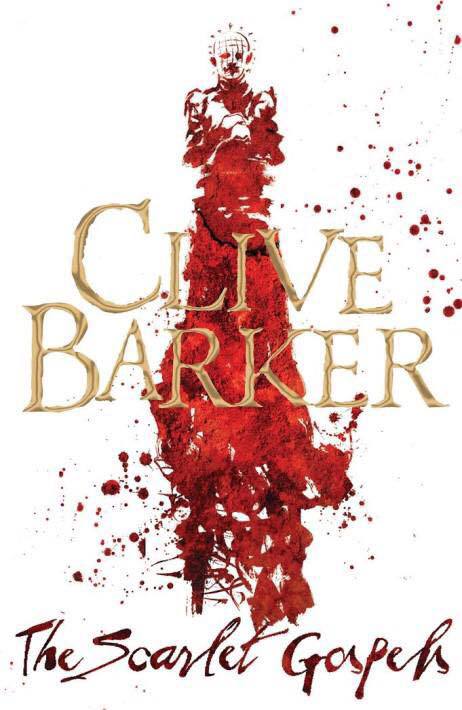
The Scotsman Abroad | On Barker's Bite

Remember when Clive Barker mattered? 
Time was, he stood shoulder to shoulder with Stephen King and his kith and kin as one of the heavy hitters of popular horror. In the late '80s and all through the '90s, his seamless weaving of the stuff of sex together with the inevitable perversity of death led to a string of critical and commercial successes including Weaveworld, Cabal, Imagica and Everville. But over the years, the man became a brand. The macabre amalgam of visceral violence and exotic erotica that set his narratives apart from the pack at the start had, by the time of its samey culmination in Coldheart Canyon, diminished his fiction. Barker was about to lose his bite—such that it was a relief, really, when he changed gears completely.
As a long time admirer of the aforementioned author, and a die-hard fan of the Hellraiser franchise—up to and including the stupidest sequels—I had high hopes for The Scarlet Gospels, which sees Clive Barker taking ownership of the High Priest of Pain for the first time since, I think, the first of the films.


If anything, my expectations were raised when, after something like a decade on the drawing board, The Scarlet Gospels saw the light of day this past May—and what do you know? It was relatively well received. Most of the reviews I perused were good going on great, so when I finally got around to reading Barker's first proper horror novel—excepting Mister B. Gone and the Abarat books—in nearly fifteen years, I was basically beside myself with excitement.

And you know what? That first chapter? Fucking. Fantastic. Classic Clive Barker.

But from there on out, I'm afraid, The Scarlet Gospels is "business as usual, at best." And the rest of the time, "it reads like an unsightly reminder of a writer past his prime."

Strange Horizons has my full review. Please do click on through.

Monday, 13 July 2015

Book Review | Underground by S. L. Grey


The Sanctum is a luxurious, self-sustaining survival condominium situated underground in rural Maine. It's a plush bolt-hole for the rich and paranoid—a place where they can wait out the apocalypse in style. When a devastating super-flu virus hits the States, several families race to reach it. All have their own motivations for entering The Sanctum. All are hiding secrets.

But when the door lock and a death occurs, they realise the greatest threat to their survival may not be above the ground—it may already be inside...

***

In this day and age, grave danger is everywhere. Quite aside from the exponential toll of terrorism, there's environmental catastrophe to consider, and so many potential vectors of deadly infection that just counting them could kill you—never mind the nukes pointed at every major population centre on the planet.

That the world will end—and sooner rather than later, some say—is as good as a given. Something's got to give, and when it does, you and your loved ones will want somewhere safe to stay. Somewhere completely sealed against sickness; somewhere with such state-of-the-art security that not even a mouse could get into your house; somewhere so darned deep underground that surviving the bombs that are sure to start dropping is guaranteed to be a breeze.

The Sanctum is that somewhere.

A stylish, self-sustaining survival condo built hundreds of metres below the bedrock of the great state of Maine, The Sanctum comes complete with a swimming pool, gym facilities, its own medical suite, an elevator, high bandwidth wi-fi, biometric locks, motion sensors and a Grow Your Own garden. In short, it's sure to ensure "pure peace of mind" (p.10) even as the world beyond its barbed-wire bounds goes to hell in a handbasket.

Promises, unfortunately, are only as strong as the person who makes them, and Greg, the mind behind The Sanctum, may have cut a couple of corners in the course of its construction. Precious few of the mod cons he pitched to the five families who bought into the prospective project are fully functional, and an array of them aren't even there: the elevator is an empty shaft, for example, and the medical suite is a metal bed with a nearby supply of band-aids.

But when the apocalypse appears, better, by all accounts, to take some semblance of shelter than none.

Least... you'd think that, wouldn't you?

Friday, 29 May 2015

Book Review | Day Four by Sarah Lotz


Four days into a five day singles cruise on the Gulf of Mexico, the ageing ship Beautiful Dreamer stops dead in the water. With no electricity and no cellular signals, the passengers and crew have no way to call for help. But everyone is certain that rescue teams will come looking for them soon. All they have to do is wait.

That is, until the toilets stop working and the food begins to run out. Then, when the body of a woman is discovered in her cabin, the passengers start to panic. There's a murderer on board the Beautiful Dreamer... and maybe something worse.

***

Got an appetite for good food? Hungry for some unforgettable fun?

If you answered yes to those questions, then Foveros Cruises is beside itself with excitement to invite you to spend a week on the sparkling seas aboard The Beautiful Dreamer—a once in a lifetime opportunity to get to know North America's number one psychic, Celine del Ray.

That's not all this holiday has to offer, either:
Soak up the sun during one of our many exciting excursions, where you can shop till your drop at our many concessions, snorkel in turquoise seas, horse-ride along beautiful beaches, and enjoy al fresco dining on our fabulous private island. 
Sounds like a fine way to spend a few days, doesn't it? Folks: don't be fooled. The Beautiful Dreamer might be a luxury liner, but Day Four describes a holiday from hell—and not just because of the bad buffet.

The first three days of the cruise are "relatively uneventful." (p.3) The ship makes a few stops in a few choice spots. The holidaymakers get to stretch their legs. They're well fed, and entertained in the interim. The WTF only hits the fan on day four, when a fire ravages the engine room, stranding The Beautiful Dreamer at sea.

The next thing the three thousand-some souls aboard know, the power goes out, taking access to the internet with it—and for some reason the radio also stops responding. Essentially, every thread connecting the ship to the world as we know it is suddenly severed.

Monday, 17 November 2014

Book Review | Revival by Stephen King


In a small New England town, in the early 60s, a shadow falls over a small boy playing with his toy soldiers. Jamie Morton looks up to see a striking man, the new minister, Charles Jacobs. Soon they forge a deep bond, based on their fascination with simple experiments in electricity.

Decades later, Jamie is living a nomadic lifestyle of bar-band rock and roll. Now an addict, he sees Jacobs again—a showman on stage, creating dazzling 'portraits in lightning'—and their meeting has profound consequences for both men. Their bond becomes a pact beyond even the Devil's devising, and Jamie discovers that revival has many meanings.

A masterpiece in the great American tradition of Nathaniel Hawthorne and Edgar Allan Poe, this rich and disturbing novel spans five decades on its way to the most terrifying conclusion Stephen King has ever written.

***

Whether you love his work or loathe it—and there are those who do, difficult as that is for those who don't to discern—you've got to give Stephen King credit, in the first for working so damned hard. Over the forty years of his career, he's written fifty-odd novels, and financially, you have to imagine he'd have been sitting pretty after the first five.

This, then, isn't a man who does what he does for the money. Demonstrably, I dare say, he does it for the fun, and that's a fine thing, I think; after all, to paraphrase Dreamcatcher's central character, doing the same shit day after day does get dull, and dull is the last thing a writer writing recreationally can afford to be. To escape that fate, King has reinvented himself repeatedly in recent years. He's come up with a couple of very credible crime thrillers, commingled conspiracy with the stuff of science fiction and composed love letters to the old days and ways.

In that respect, Revival is a real throwback. A supernatural horror novel of the sort not seen since Duma Key, it's classic King, complete with fantastic characters, a suggestive premise and an ending I'm going to politely describe as divisive.

Revival begins reflectively:
In one way, at least, our lives really are like movies. The main cast consists of your family and friends. The supporting cast is made up of neighbours, co-workers, teachers, and daily acquaintances. There are also bit players: the supermarket checkout girl with the pretty smile, the friendly bartender at the local watering hole, the guys you work out with at the gym three days a week. And there are thousands of extras—those people who flow through every life like water through a sieve, seen once and never again. [...] But sometimes a person who fits none of these categories comes into your life. This is the joker who pops out of the deck at odd intervals over the years, often during a moment of crisis. In the movies this sort of character is known as the fifth business, or the change agent. When he turns up in a film, you know he's there because the screenwriter put him there. But who is screenwriting our lives? (p.1)
There's a lot in this paragraph to unpack: the idea of the illusion of life; the allusion, not unrelatedly, to God as the author of all; and an introduction to the narrative's eventual antagonist, Reverend Charles Jacobs. Let's focus on that last.