Showing posts with label Strange Horizons. Show all posts

Friday, 4 September 2015

The Scotsman Abroad | On Barker's Bite

Remember when Clive Barker mattered? 
Time was, he stood shoulder to shoulder with Stephen King and his kith and kin as one of the heavy hitters of popular horror. In the late '80s and all through the '90s, his seamless weaving of the stuff of sex together with the inevitable perversity of death led to a string of critical and commercial successes including Weaveworld, Cabal, Imagica and Everville. But over the years, the man became a brand. The macabre amalgam of visceral violence and exotic erotica that set his narratives apart from the pack at the start had, by the time of its samey culmination in Coldheart Canyon, diminished his fiction. Barker was about to lose his bite—such that it was a relief, really, when he changed gears completely.
As a long time admirer of the aforementioned author, and a die-hard fan of the Hellraiser franchise—up to and including the stupidest sequels—I had high hopes for The Scarlet Gospels, which sees Clive Barker taking ownership of the High Priest of Pain for the first time since, I think, the first of the films.
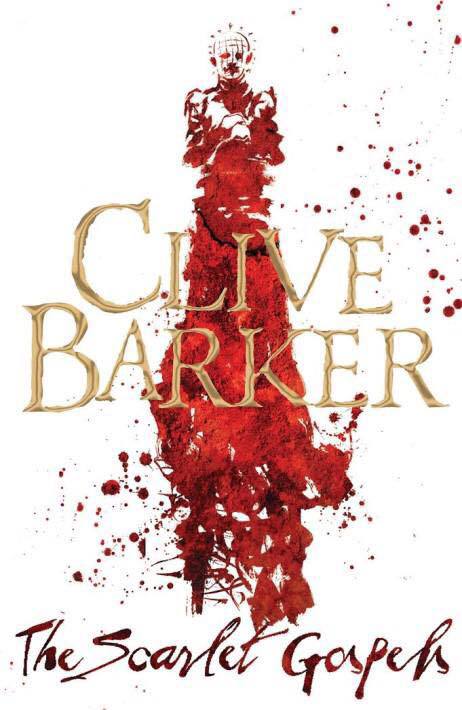

If anything, my expectations were raised when, after something like a decade on the drawing board, The Scarlet Gospels saw the light of day this past May—and what do you know? It was relatively well received. Most of the reviews I perused were good going on great, so when I finally got around to reading Barker's first proper horror novel—excepting Mister B. Gone and the Abarat books—in nearly fifteen years, I was basically beside myself with excitement.

And you know what? That first chapter? Fucking. Fantastic. Classic Clive Barker.

But from there on out, I'm afraid, The Scarlet Gospels is "business as usual, at best." And the rest of the time, "it reads like an unsightly reminder of a writer past his prime."

Strange Horizons has my full review. Please do click on through.

Monday, 27 April 2015

The Scotsman Abroad | Ascending the City of Stairs

As we speak, I find myself on a bit of a science fiction kick. On the back of Way Down Dark by James Smythe and Crashing Heaven by Al Robertson, I'm deep in Seveneves by Neal Stephenson, with Slow Bullets by Alasdair Reynolds, Nemesis Games by James S. A. Corey and Aurora by Kim Stanley Robinson coming up.

Far be it from me to moan! The first few of those books have been brilliant, and I have every reason to expect great things from the remainder. If I had my druthers, I'd be reading a bit of fantasy, a spot of horror and maybe a mite of crime between all that sf, but deadlines are deadlines, and that's fine.

Happily, the last fantasy novel I read for review was tremendous, too—apart from a somewhat sluggish start:
Building worlds is hard work: a self-evident statement which goes some way toward explaining why most authors make do with the mundane plane that has us all in its thrall. But putting the umpteen pieces of truly wonderful worlds together—worlds whose histories and mysteries resonate with readers and ring of authenticity despite the fact that they’ve been conjured whole-cloth—has to be harder by far. There’s no right way to do the deed, either, and the field is replete with wrong ‘uns. Some creators descend into tedious detail; others leave so much to the imagination that the foundation of the fiction that follows is fitful. Robert Jackson Bennett falls fleetingly afoul of the former problem in his first full-on fantasy; but I’ve got good news, too, in that the world, when it is built, is brilliant: the story of City of Stairs springs from Bennett’s setting, leading to a feeling of coherency, of completeness, that precious few fantasies can match. The narrative’s characters, too, are inextricably of the divided domain it describes. 
Imagine, if you will, a realm in which gods once walked among men: a Continent complete with a half-dozen different living divinities. No one can say with any certainty where they came from, or what they could possibly have wanted—only that each of the six built its own city, its own base of operations, and called upon its most fervent followers to further the divergent doctrines of their chosen one of choice.
Read the rest of my review of City of Stairs on Strange Horizons. You can and you should, too. It's a bloody good book—certainly the most satisfying fantasy I've laid eyes on since Smiler's Fair.

Wednesday, 13 August 2014

The Scotsman Abroad | The Afterparty At Last

Some time ago, I told you all how much I was looking forward to Daryl Gregory's new novel. Well, its release date in the UK is this week. At long last, the Afterparty is upon us!


Alas, I didn't love it. In my review for Strange Horizons, written around the time of Afterparty's publication in April Stateside, I commented as follows:
Taken together, The Parable of The Girl Who Died and Went to Hell, Not Necessarily in That Order, and The Sixth Sense twist at the back of the first chapter, when it dawns on us that Dr. Gloria is a pharmaceutical figment of Lyda's lively imagination, do a terrific job of eliciting interest—intrigue, even—in Afterparty, but what follows is, if not flat, then fairly familiar. Too soon, Gregory disposes of the doctor—she has a good Christian conscience, of course, so Lyda's abuse of Ollie bothers her—and in her absence, Afterparty becomes a more mundane chase-and-escape affair than the suggestive start of the book moots: it's revealed to be a thriller as opposed to a thinker, less Philip K. Dick than Lee Child or the like. 
It's a credit to Gregory that the going is engrossing in any event, in large part because of its pitch-perfect pace: a race to the finish line, in fact, between Lyda's lot and a cowboy contract killer called Vincent—pardon me: the Vincent (don't ask)—by way of a series of exciting set-pieces, such as the party's botched border crossing after an uncomfortably close encounter with an elderly Afghan drug distributor. 
On the back of Raising Stony Mayhall, I don't suppose it should come as a surprise that the author is more interested in character than narrative, but I found it harder to love Lyda than I did the eponymous zombie of Gregory's last novel, and Afterparty's plot, though perfectly paced, proved more pedestrian than that suggested by the promising premise.

Afterparty is a good book, to be sure, but here I'd been hoping for something superlative. Do yourself a favour and read Raising Stony Mayhall instead. Now that is an awesome novel.

Thursday, 7 November 2013

The Scotsman Abroad | On Graham Joyce

Yesterday I received an email that brought both my partner and I to an absolute standstill.

We've both been reading Graham Joyce for years, you see; Memoirs of a Master Forger was my first of his works, whilst the other half has had a passion for his ghostly prose since The Silent Land. Invariably, one of us will manage to bagsy his new book before the other does, such that it's become something of a game between us.


So the news that he has cancer, that he nearly died six months or so ago... let's say it cast a dark cloud over the remains of the day. Per the press release I received:
Graham Joyce received a standing ovation at the 1,000-strong awards ceremony of the World Fantasy Convention in Brighton on Sunday 2nd November 2013. Picking up the Best Fantasy Novel Award for an unprecedented sixth time in his career, Joyce was earlier this year diagnosed with aggressive lymphoma cancer. The event marked his first public appearance since his diagnosis.
Joyce won the Best Fantasy Novel Award for Some Kind Of Fairy Tale, a story in which a young girl thought to have been abducted from the woodlands of the East Midlands returns to her family after twenty years. 
Six months ago Joyce had the experience of being revived by an emergency resuscitation team at the Leicester Royal Infirmary. Joyce said, “Just being able to stand here today is a wonderful award, thanks to the doctors and nurses of the NHS.”
Inadequate as it is, I can only express how happy I am that the doctors and nurses of the NHS managed to bring the man back, and how sorely I hope that he has many more years of good health ahead.

In any event, I've seen a fair few folks express curiosity about his work since the bad news broke, and I'd love for them to discover him as the other half and I have, so I thought I'd gather together links to the reviews I've written of his books.

Here's what I had to say about The Silent Land.

Here are my thoughts on the book he won the Best Fantasy Novel Award at the weekend for.


And to top it all off, my most recent article for Strange Horizons was a glowing review of his new novel, The Year of the Ladybird:
Almost forty years on, the scorching summer of 1976 is remembered by many; however the relative tenor of the tale depends upon the perspective of the teller, very much in the mode of local legend. Some speak of it as a bastion of all that is great about Britain... or all that was, once. Others recall the summer as a season of suffering; of water shortages, hellish heat, economic depression, and — what with the National Front nearing the peak of its power — political volatility. 
Each of these ideas has a part to play in Graham Joyce's new novel, but like the infamous insect invasion The Year of the Ladybird takes its evocative title from, they're in the background, by and large, adding if not narrative impact then immersive depth and telling texture to the text's redolent setting: a ramshackle holiday resort in a nation coming of age just as our protagonist David Barwise does over the course of this slight but delightful ghost story.
Graham Joyce is, in short, an awesome author: if you've been on the fence about his fiction, get the hell off it.

My thoughts, and my partner's, will be with him and his during this difficult time.

Thursday, 22 August 2013

The Scotsman Abroad | The Adjacency Effect

Horror of horrors: I've been without the internet for the last 48 hours!

Actually, aside the initial inconvenience, it's been a fine few days. I squeezed a whole hell of a lot of reading in, finished the superior third season of The Killing, played the final Dishonored DLC, and caught up on a few awesome comics.

It's amazing, the sheer quantity of stuff you can get done when you aren't distracted by emails and tweets and feeds and so on. If I'm honest, when I woke up this morning to see that they'd fixed things at the exchange, I was almost disappointed. Almost.


In any case, I've got an awful lot to catch up on before I'm back on track, so today, for your entertainment, let me point you elsewhere.
Seamless storytelling can sometimes seem like magic, but in The Adjacent, Christopher Priest goes to great lengths to stress the applied aspects of both practices: 
"What I do [...] is contrived to look like a series of miracles, but in reality the preparation of a magical illusion is a prosaic matter. Few people realise the amount of rehearsal conjurors have to put in, nor what goes on in the background. A trick often requires technical assistants, who will help design and build the apparatus. The movements a magician makes on stage are the result of long and patient rehearsal, while still having to look natural and spontaneous to the audience. It is an acquired practical skill, in other words. Only while in performance, in the glare of the limelight, can magic look like inspiration. Even at best it is never more than an illusion. Things are never what they seem." (p.86)
This is true of almost every facet of The Adjacent. Its narrative feels fairly straightforward at first, but the farther into the fold we go, the less linear and logical it looks. One tale turns into two, two into ten... ten threads or thereabouts, then, which contradict as often as complement one another, seeming to stand alone from the whole at the same time as suggesting some imperative collective resonance. Meanwhile, whatever motivations or expectations Priest's cast of characters either have or lack at the outset are quickly obliterated; annihilated on even the theoretical level by something uncomfortably akin to the Perturbative Adjacent Field proposed by Professor Thijs Rietvel.
You can read the rest of my review of The Adjacent over at Strange Horizons.

In short, it mightn't be the place for readers new to Christopher Priest to begin, but for those of us who've stuck with him through thick and thin, it's an astonishingly rewarding novel. In long... well, you know where to go.

Tuesday, 8 January 2013

The Scotsman Abroad | Dear Year in Review

How's it going, folks?

I'm still in Skye, so forgive the relatively short blog. Hard to believe, but internet access is a precious commodity here, even in the year 2013: I've had to camp out in a WiFi-friendly pub in Portree, complete with a pint of Dark Island and my massive laptop. Fair to say, then, that I look a little conspicuous - there isn't even a smartphone in sight - so I'll keep this quick.

Last week, Strange Horizons' published their round-up of the Year in Review, and I wanted to direct you all towards it. This is the third time I've contributed to the feature, I believe, and as ever, the invite was an absolute highlight.

So what did I do with my 250 words?

Well, given the genre of the books I reviewed for Strange Horizons in 2012, I decided to focus on horror and dark fantasy fiction. Firstly, I burbled about The Drowning Girl: A Memoir - I'll toot my horn about that text any chance I get - but I couldn't very well discuss the year in all things creepy and/or crawly without making mention of season one of The Walking Dead, the incredible episodic entity I named my favourite game of 2012.


Thanks to the alphabet, my contribution comes first, but I implore you to read on for a paragraph or two from a who's-who of the site's most insightful critics. To see my work next to theirs - especially without an asterisk denoting I don't belong amongst such upstanding company - is an astonishing honour.

A brief word of warning: if it's anything like mine, your wallet simply can't handle all this awesome. By all means read the article anyway — just be prepared to seriously consider a new credit card after.

I've been nursing this ale for altogether too long already, so I'd best be off, but we'll talk again on the other side of what's been a deeply geeky holiday!

Back to Dungeons & Dragons and The Grim Company I go. :D

Tuesday, 30 October 2012

The Scotsman Abroad | The Cost of The Croning

Today's post serves a pair of purposes. The first, as is traditional with The Scotsman Aboad, is to point you in the general direction of something I've had published elsewhere, and on this, the afternoon before the eve of All Hallow's, I find I have a fearsomely fitting review to share.


The Croning by Laird Barron is an oddly intimate novel of cosmic horror:
Laird Barron's first novel has been a long time coming. To great acclaim amongst certain circles, the Alaskan author has spent in excess of a decade contributing short stories to an array of magazines and anthologies. Many of his most notable efforts have been reprinted in year's best collections—all four editions of The Best Horror of the Year, edited by Ellen Datlow, feature Barron's distinct fiction—and upon their assembly into The Imago Sequence and Other Stories, and later Occultation, his dread dialogues were showered with honors and nominations, including but not in the least limited to nods from the Shirley Jackson Award, the World Fantasy Award, the Bram Stoker and the Locus.

One comes to The Croning, then, with great expectations, anticipating horror of the highest order, and indeed, this is delightful dark fantasy, as delicate as it is inevitably devastating.

Fittingly, it begins with a drastic recasting of Rumplestiltskin:

"That venerable fairytale of the Miller's daughter and the Dwarf who helped her spin straw into gold has a happy ending in the popular version. The events that inspired the legend, not so much." (p.1)

Thus, in the opening phrases of The Croning, Barron begins this juxtaposition of the down to earth with what we might describe as out of this world.

If you missed The Croning upon its publication earlier in 2012, as I confess I did, I can't imagine a better time to get stuck into this delicately damned debut than now; clearly, it's ideal reading for the creepy season.

But wait! There's more...

You know how they say the best things in life are free? I call nonsense. Invariably, in my experience at least, though the best things in life sometimes appear to be gratis, in actual fact they often cost an awful lot of money. Like Strange Horizons, say.

In short, Strange Horizons is a depository of awesome authors. Of considered opinions, canny columns and incisive criticism; of moreish poetry and fantastic fiction. I honestly don't know what the hell they're thinking publishing my rubbish, but the very idea that they do, from time to time, makes me feel like one of the luckiest bloggers about.

In any event, every year Strange Horizons runs a fund drive, so that the site can pay its contributors - including yours truly - professional rates, as well as cover any other overheads. And with the end of 2012 fast approaching, the time has come to raise the funds the magazine requires to continue through 2013.


The progress rocket is tracking $5k of donations at the time of this writing, but to hit the topmost target - which will mean free podcasts of the stories Strange Horizons publishes, and a 50% rate raise for reviewers and those who compose poetry - to hit the topmost target, we need to get another six grand together.

This is more than the site's ever asked before, so the management are offering rewards to those whose donations hit a certain threshold, including t-shirts, sponsorships and the ability to choose a book for us to review.

All the details are here.

So if you get any extra money whilst out trick or treating this year, why not considering giving it to a worthy cause? Genre-oriented resources don't come any better than Strange Horizons, in my eyes.

And in some small way, you'll even be helping me, because - take a breath! - improved pay rates mean more Monopoly money in my personal PayPal account to spend on more books to review here on The Speculative Scotsman for free.

And that would be good. :)

Thursday, 3 May 2012

The Scotsman Abroad | True Lies Untold in The Drowning Girl

At long last, it's time to talk about one of the best books of the year!

We'd have hit it somewhat sooner - excepting a couple of corrections, the review was good to go more than a month ago - but what with all the incredible guest blogs and everything else, by which I mean buckets of beer, I hardly had the opportunity to attend to it during my American absence.

Tell you what, though: six or eight weeks on from my initial read-through of The Drowning Girl: A Memoir, the latest from Caitlin R. Kiernan - and I do believe the final novel of its kind to come from the aforementioned author - has lost none of its power. If anything, it's gained certain shades in my imagination.


You could call The Drowning Girl: A Memoir a ghost story and not be terribly far off the mark, but it's a ghost story only Caitlin R. Kiernan could have written. She's among the most unique voices in genre literature today, and I am, I confess, more than a little mixed in the feelings department to hear that she means to appeal to the YA market with her next novel, Blood Oranges.

Whether it's the last of its line or not, The Drowning Girl: A Memoir is a truly virtuoso piece of work. A masterful feat, even considering Kiernan's standard caliber. If indeed it is time for her to move on, from one world to another, then I can't conceive of a book that better represents all that she's achieved since Silk. 

In any case, Strange Horizons published my review of The Drowning Girl: A Memoir yesterday, so here's a snippet of it:

India Morgan Phelps — Imp to everyone she and we come to care about over the course of The Drowning Girl: A Memoir — is insane. Probably. Maybe. Possibly. But in any case "there's crazy and then there are crazy people who believe in mermaids and werewolves and unicorns and fairies and shit" (p. 228), a decent distinction which, indecently, leaves Imp doubly damned, because she's a disorganised schizophrenic from a longish line of asylum attendees, tormented in the interim by lunatic visions of a spectre in the skin of a girl.

So what's her word worth? In all likelihood, not a lot. Perhaps nothing. Or else, equally, everything. Assuredly it's all we have to go on in the ninth novel from one of dark fantasy's most masterful artists. This is Imp's memoir, after all — her suggestively subjective account of certain incredible events — and though there are other characters sewn into the road of needles she takes, she is the author of each and every one; we only ever see them through her uncanny, meandering eye. Thus, the question is, was, will always be: is Imp's fly-by-night narration enough to unpick the enigmas within this eminently telling text?

The simple fact is, it isn't. But the truth is, it is.


You can read the rest of my review over at Strange Horizons, and I really would urge you to. If you're a fan of fine dark fantasy - and amongst us, who isn't? - The Drowning Girl: A Memoir is not a book you can afford to overlook.

Meanwhile, on The Speculative Scotsman tomorrow, we'll touch on another of the early year's best. I don't want to give the game away as to its identity just yet, but if you've been paying attention to my tweets this past week... you'll have an inkling, I think.

Friday, 7 October 2011

The Scotsman Abroad | On An Island

So the latest of my reviews for Strange Horizons went up a week or so ago.

It's of The Islanders by Christopher Priest, which you may recall was one of my most anticipated new releases of the year.


Turns out I wasn't wrong to be so excited about it. Here's a snippet, from the very beginning of the article:

Whatever you think The Islanders is, think again. 
That is unless you think it's the first new novel by Christopher Priest in almost a decade; it is that. But none of the other things you may or may not or may yet imagine of it are even close, to be sure. 
Actually... strike that. The Islanders isn't even a novel in the conventional sense, because despite appearances to the contrary, or else precisely because of them, The Islanders is not so much a narrative, with a plot and characters or any of the usual storytelling accoutrements, as it is a travel guide — a work of reference — purportedly written by and for tourists en route to or through the Dream Archipelago, which is to say "the largest geographical feature on our world" (p.8): an elusive arrangement of some several hundred thousand islands, large and small, scattered about a single vast ocean and enclosed on the north and the south by two gargantuan continents entrenched in perpetual warfare with one another.
I say that. But in truth (not that there is truthfully a single truth to be arrived at throughout this astonishing testament to Priest's much-missed mode of magical realism, unless there is), these too — these broad, whispered, hand-me-down physical characteristics — are called into question on more than one occasion as we track the seemingly meandering ley lines of The Islanders. For various reasons, you see, foremost amongst them gravitational anomalies known as temporal gradients which make aerial navigation practically impossible — and this is very much par for the course in Priest's latest — "There are no maps or charts of the Dream Archipelago. At least there are no reliable ones, or comprehensive ones, or even whole ones" (p.14). 

Ladies and gentlemen, be my guest: click on through to read the rest!

And if you're still on the fence about this beauty of a book, I'd also point you towards Adam Roberts' excellent review of The Islanders over on Punkadiddle. Adam writes that The Islanders is "a magnificent novel, one of my books of the year," and I'm not at all inclined to disagree.

Saturday, 4 June 2011

The Scotsman Abroad | Strange Tales of Dark Fantasy 2

Yeah, I've been getting about a bit of late, haven't I?

Well, there's no stopping me now! :D

As ever, it's an absolute pleasure to be on the roster of regular contributors to Strange Horizons, and they've just published another piece of mine: my review of Subterranean Tales of Dark Fantasy 2, which is to say a second anthology of dark fantasy tales published by Subterranean Press.

No shit, you say. Actually, I'm only being an oaf in part. In fact please, pop on over to Strange Horizons and read my review of the second Subterranean Tales of Dark Fantasy to find out just how hard to categorise this anthology proved.


For those of you on the fence about this collection, I'd draw particular attention to "A Pulp Called Joe" by David Prill and Stephen R. Boyett's "Not Last Night But The Night Before." Both truly excellent tales in their own right, and by a pair of authors I confess I'd never read before I sat down with Subterranean Tales of Dark Fantasy 2.

And that right there is what I love about anthologies: the high probability of accidental, or perhaps I should say incidental, exposure to talents unknown, and authors untold. Needless to say, going forward I'll be seeking out other work by Prill and Boyett wherever it may be... and wherever it might, in turn, lead me.

So tell me, everyone: what have been some of the best surprises you've had - the most revelatory discoveries you've made - by way of collections and anthologies?

Thursday, 19 May 2011

The Scotsman Abroad | Robopocalyptic Tidings

Doesn't it seem like only yesterday I was telling you all how proud I was to have sold a review to Strange Horizons? To be a part of that great institution?

Well, in actual fact it was more than six months ago. Six months in which I've written six reviews for the site. And so as not to seem like I'm taking over - though in such sterling company I expect that'd be a very hard sell - I thought it might be time to ply my trade elsewhere.

But where?

One of the very first genre review resources I thought of was The Zone, which publishes the work of Jonathon McCalmont and David Hebblethwaite - an incredible pair of reviewers to whom I often look, for inspiration and for recommendations - among, of course, a myriad illustrious others. 

Needless to say, then, it gives me tremendous pleasure to be able to tell you today: I'm officially a contributor. For my first trick - my first of many, if I have my way - I've reviewed Robopocalypse, by Daniel H. Wilson; a book which came to me by way of a good friend of The Speculative Scotsman, blog and blogger alike.


Here's the article, in any event...

...the article in which I somehow manage to accuse my internet connection of criminal conspiracy, take Hollywood to task, and generally have a bit of harmless, sci-fi inspired fun.

Perfectly appropriate behaviour given the text in question - which isn't to speak ill of it at all! Actually, I really rather enjoyed Robopocalypse, which, for its part, looks to be a pretty big deal in the offing. None other than Steven Spielberg bought the film rights pre-publication, to direct himself for release sometime in 2013. And that's something.

So if you hadn't heard of Robopocalypse before now, or if your interest in Daniel H. Wilson's first proper novel is otherwise piqued, well, what better time than now?

And what better place than here?

Indeed. :)

Saturday, 7 May 2011

The Scotsman Abroad | Casting Out The Outcasts

It's been a little while since my last contribution to Strange Horizons - well, a couple months - so I'm pleased to report that this week marked my (triumphant?) return to the esteemed reviews section. And you'll be seeing me on the site again shortly, by way of an extensive take on the second Subterranean Tales of Dark Fantasy anthology, published on a date TBD.


For the moment, however, it gives me great pleasure to direct your attentions toward this review of Outcasts, in which I make arguably dubious comparisons between the war on terror and the Beeb's woeful attempts at genre television, and generally speaking tear Britain a bit of a new one. To wit, the introduction:

"Shit having gone suddenly sideways on Earth, a handful of humanity's best and brightest - all British folks, of course - have made a home away from home for themselves on Carpathia, a so-called Goldilocks planet named in honour of the ship which rescued a scant few survivors from the wreckage of the Titanic. It's a neat nod; one that Outcasts, the BBC's recently canned science fiction series, no sooner makes than moves to force down your throat. 
"So it begins."

Needless to say it's a pretty negative piece.

Well, here's to fighting fire with fire, because watching Outcasts was a pretty negative experience for me. Any of you folks seen it yet? Care to share?

Monday, 14 February 2011

The Scotsman Abroad | The Heroes and The Hype

There are a lot of big hitters to look forward to in 2011. From my particular perspective, The Wise Man's Fear can't get here soon enough; I'm as excited about The Republic of Thieves as much as the next guy - though with certain reservations; and while to my eternal shame I'm a mile behind on A Song of Ice and Fire, the notion of new George R. R. Martin certainly sets my heart a-fluttering, so certainly A Dance With Dragons is high on my annual bookish bucket list.

But you know what? Nothing beats new Joe Abercrombie. Simply because the guy's more timely and reliable than the aforementioned array of capital fantasy names, the hype train behind his latest - and greatest - seems somewhat perversely like it lacks the momentum of the long-delayed. Which leaves me wondering just how incredibly easily marketers could manufacture the sort of pant-wetting excitement that greets and any all news about the trio up there.


Anyway.


The Heroes, out now from Gollancz in the UK and Orbit in the US, is handily Joe Abercrombie's best book, and though I'm afraid you won't be seeing a review of it here on The Speculative Scotsman, sell-out speculator that I am - and as Scotch as spring broth - I did indeed review it. In fact I reviewed it way back when, in November. But the overlords at Strange Horizons (bless them every one) have only just pressed the big red PUBLISH button on my rather lengthy piece.


Reading it over now, with a few weeks and months between me and it, to my surprise I'm pretty pleased with how it came out: so please, do pop on over and have a look at the review in full.

Wednesday, 5 January 2011

The Scotsman Abroad | Who's Afraid of The Year in Review?

...well, excepting the obvious answer - and alas, the Loch Neth sea monster's not feeling his best, so. You know. ;)

But not I!

Perhaps it's symptomatic of some early-game enthusiasm for the whole process of blogging, but with Top of the Scots back before Christmas I spent a whole week ringing in the year's best, and I still found myself with enough of an appetite to rattle off a few favourites that, when asked, I was pleased as punch to contribute for the first time to a certain annual Year in Review.


Purely for alphabetic reasons - that's my story and I'm sticking to it - my abbreviated nods get the whole celebratory shindig off the ground, but stick around for contributions from a who's-who of Strange Horizons' best and brightest writers.

I'm in some might fine company, aren't I?

Going in, be warned: you will very likely have spent all your Christmas money on books you hadn't even heard before you're through with this Year in Review. I know I did...

Monday, 20 December 2010

The Scotsman Abroad | Dark Matter on Strange Horizons

I had dearly hoped to post a triumvirate of reviews this week - one for each of the winners of the Top of the Scots, no less. Sadly, however, certain circumstances have arisen just in time to chuck a hulking great spanner in the works: the lovely other half took a fall while at work the other day and came home concussed.

So. For the immediately foreseeable, I'm afraid blogging's going to have to take a bit of a back seat. That said, I'll do my utmost to steal a few minutes while she's snoozing and/or hallucinating (courtesy of some serious painkillers) to write up a couple of things - the better to keep you all entertained this Christmas week. And for the moment, I'd recommend you click on through to read this review of Dark Matter by Michelle Paver.

You might be somewhat familiar with the author's previous work. And by "the author," I mean me, because - would you credit it? - I sold another review! :D

God love the tiddlypeeps at Strange Horizons for editing some sense into my otherwise meandering critiques...

Anyway, do wish the other half a speedy recovery! The sooner she's better, the sooner I can get back to figuring out how to enthuse about The Habitation of the Blessed without suggesting it's like reading poetry - a statement Cat Valente would very likely kick my ass for making.

But go on, now.