Showing posts with label reviews. Show all posts

Tuesday, 25 July 2017

Book Review | The Rift by Nina Allan


Selena and Julie are sisters. As children they were closest companions, but as they grow towards maturity, a rift develops between them.

There are greater rifts, however. Julie goes missing at the age of seventeen. It will be twenty years before Selena sees her again. When Julie reappears, she tells Selena an incredible story about how she has spent time on another planet. Selena has an impossible choice to make: does she dismiss her sister as a damaged person, the victim of delusions, or believe her, and risk her own sanity in the process? Is Julie really who she says she is, and if she isn't, what does she have to gain by claiming her sister's identity?

The Rift is a novel about the illusion we call reality, the memories shared between people and the places where those memories diverge. It is a story about what might happen when the assumptions we make about the world and our place in it are called into question.

***

Around the middle of The Rift, a sister who insists that her traumatic twenty-year disappearance came about because she woke up in another world says, by way of explaining why she now shelves her novels in with her non-fiction, that "no book is completely true or completely a lie. A famous philosopher at the Lyceum once said that the written word has a closer relationship to memory than the literal truth, that all truths are questionable, even the larger ones. Anyway, it's more interesting. When you shelve books alphabetically you stop noticing them, don't you find?" (pp.199-200)

I may be too time-poor to even contemplate such an almighty organisational endeavour, and yet... I'm tempted, because there's some truth to Julie's attitude, I'm sure. Once something becomes known, you do stop noticing it—and there's so much in the world that needs noticing, so much that in a sense deserves the extra attention. Not least Nina Allan's new novel, which, like her last—namely The Race, a story of stories about the lives of ordinary people becoming unfastened from reality—mixes the real with the unreal to tell a uniquely human tale, albeit one that may contain aliens.

Like the lawless library we learn about later, The Rift swiftly resists the rules readers expect fiction to follow from the first by beginning both before and after the fact. Before, we learn of a girl—Julie's little sister Selena—who befriends a bloke who sadly commits suicide when his koi pond is poisoned. After, the girl is a grown-up, out drinking with a few of her few friends, who answers the phone upon coming home to hear a woman introduce herself as Julie:
Selena's first, split-second reaction was that she didn't know anyone called Julie and so who the hell was this speaking? The second was that this couldn't be happening, because this couldn't be real. Julie was missing. Her absence defined her. The voice coming down the wire must belong to someone else. (pp.23-24)
But it doesn't. The caller is her missing sister. Selena knows it in her bones from the moment they meet in a coffee shop a day later. She has the same way of making Selena feel insignificant; the same memories of what they went through when they were wee; she keeps the same secrets, even.

She keeps a couple of other secrets too, to start. Even after Selena accepts this new though not necessarily improved Julie into her life—a quiet life defined by Julie's absence as much if not more so than Julie's own—she simply won't tell her sister where she's been all these years, nor why she's gotten in touch all of a sudden.
Friday, 4 September 2015

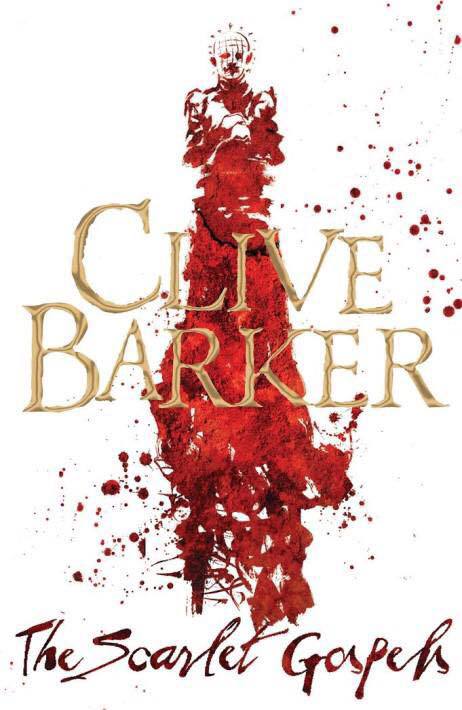
The Scotsman Abroad | On Barker's Bite

Remember when Clive Barker mattered? 
Time was, he stood shoulder to shoulder with Stephen King and his kith and kin as one of the heavy hitters of popular horror. In the late '80s and all through the '90s, his seamless weaving of the stuff of sex together with the inevitable perversity of death led to a string of critical and commercial successes including Weaveworld, Cabal, Imagica and Everville. But over the years, the man became a brand. The macabre amalgam of visceral violence and exotic erotica that set his narratives apart from the pack at the start had, by the time of its samey culmination in Coldheart Canyon, diminished his fiction. Barker was about to lose his bite—such that it was a relief, really, when he changed gears completely.
As a long time admirer of the aforementioned author, and a die-hard fan of the Hellraiser franchise—up to and including the stupidest sequels—I had high hopes for The Scarlet Gospels, which sees Clive Barker taking ownership of the High Priest of Pain for the first time since, I think, the first of the films.


If anything, my expectations were raised when, after something like a decade on the drawing board, The Scarlet Gospels saw the light of day this past May—and what do you know? It was relatively well received. Most of the reviews I perused were good going on great, so when I finally got around to reading Barker's first proper horror novel—excepting Mister B. Gone and the Abarat books—in nearly fifteen years, I was basically beside myself with excitement.

And you know what? That first chapter? Fucking. Fantastic. Classic Clive Barker.

But from there on out, I'm afraid, The Scarlet Gospels is "business as usual, at best." And the rest of the time, "it reads like an unsightly reminder of a writer past his prime."

Strange Horizons has my full review. Please do click on through.

Monday, 5 March 2012

The Monday Miscellany | Another Earth, The Burma Chronicles, Rayman Origins

For a more formal introduction to The Monday Miscellany, feel free to click here.

Truth be told, though, but there's not really so much to tell. The Monday Miscellany is basically a space for me and you and we to talk about things that I either can't summon a thousand words' worth of stuff and nonsense to say about, or are so very far outside the purview of a blog at least ostensibly about speculative fiction that I'd have a right cheek trying to pass said off as such on anything more than an occasional basis. 

What more do you need to know?

***

Let's get things started with another Oscar oversight: Another Earth. A shoe-in for Best Picture, if you ask me, but no one did, and in the end it didn't even make the longlist. This is the third and final proof I'll offer - after my reviews of Project Nim and Take Shelter, here and here - that the Academy have taken a brain vacation.

On our Earth, Brit Marling is Rhoda Williams, an astronomy aficionado and Another Earth's lovely leading lady. Her life has been shaping up pretty nicely - she's just been accepted to M.I.T. - but after a party one night, news breaks that a new planet has appeared from the other side of the sun. It appears identical to our own, and Rhoda can't resist a stupefied skyward stare. Thing of it is, she's driving, and she's drunk. Inevitably, she smashes into a parked car with a happy family in it, killing everyone but the father.

Four years later, Rhoda is released from prison, but the overwhelming sense of guilt she feels still has a hold on her. After several suicide attempts, she resolves to face up to her train-wreck effect on the planet; she visits the surviving father in his home, ostensibly to apologise, but balks at the last second and says she's a cleaner. To her surprise, John Burroughs takes her on, and in their time together - with this terrible secret between them all the while - Rhoda helps him get over his grief.

Meanwhile, the other earth has inched closer and closer to home, and United Space Ventures is giving away a single ticket to the first flight there.

Another Earth is one of the best science fiction films I've seen since Moon, but beyond the synopsis, it's not really about the science. The implications of a parallel world play a part in Rhoda's motivation, particularly in the hypnotic last act, but largely, Another Earth is about a pair of broken people who find comfort in one another's company. It gets uncomfortable on occasion - use you imagination - but however perverse the idea appears, there's a curious beauty to the scenes they spend together, brought to life by a spare script, two terrific actors and a first-time feature director with an eye on the sky.

Kudos too for the stunning soundtrack by Fall On Your Sword, which I immediately added to my playlist of awesome instrumental music, alongside Trent Reznor and Atticus Ross' score for The Girl With The Dragon Tattoo and the last couple of albums The Chemical Brothers put out. Clearly Cahill was aware of its excellence as well, because he integrates Another Earth's opening credits with the powerful title track, 'The First Time I Saw Jupiter.' Those three minutes alone are award-worthy, and Another Earth only gets better.

Not so Guy DeLisle, the graphic memoirist who gave us Pyongyang and Shenzen, a duo of terrific travelogues chronicling the author's working holidays in China and North Korea. The Burma Chronicles is longer than either of its predecessors, but I'm afraid quantity does not equate to quality in this case.

And that's the first problem: The Burma Chronicles feels thin. Slight despite its size. Distracted, perhaps. I wouldn't go so far as to say ill-informed, but the circumstances of DeLisle's time in Burma - or Myanmar - are such that he has little of value to impart, beyond some anecdotal stories about parenthood and the same sort of inoffensive social commentary he's put better before.

That isn't to say that The Burma Chronicles is a waste of space. On the contrary, it's a rare look inside another little-seen society, complete with some wonderful moments of wit and insight, but because DeLisle is traveling with his family, the reader isn't often afforded the opportunity to see beyond the surface of this place, and these people.

And that other pillar of Pyongyan and Shenzhen's success - the occasional glimpses into the working life of an international animator - is almost entirely absent. Given that DeLisle's trip to Burma came about because of his wife's work with Médecins Sans Frontières - basically Doctors Without Borders - I suppose that's not terribly surprising, but DeLisle is excluded from this world as well. He's surrounded by stories, as ever, little and large, but he can't quite draw them out as deftly and elegantly as he has in the past.

Still, DeLisle is a solid author when the right circumstances present themselves, and the beguiling simplicity of his Herge-esque art is in full effect in The Burma Chronicles. He sees the key frames of every encounter, and renders them excellently... if, one senses, a little lazily on occasion. A good non-fiction graphic novel, then, but Guy DeLisle is capable of great.

Speaking of great... after several weeks of sessions short and long, my fun-sized companion and I finally beat the triumphant return of Rayman, aka Rayman Origins. It took us quite the while - it didn't half get tricky towards the end there - but I wouldn't take a second of the experience back. Not even the several hours I spent soloing the unlockable Land of the Livid Dead levels; my platforming skills haven't been stretched so thin since Super Meat Boy, but all the same, I loved this game, to the point that I have a hard time conceiving of a single soul who wouldn't.

And don't think I'm some rabid Rayman fan. If anything, I'm the exact opposite; before now, one of my guiltiest gaming secrets was that I'd never played a Rayman game. Not even a Raving Rabbids. Well I'll tell you this for free: I'll be playing the next one now.


The first thing that strikes you about Rayman Origins is its dreamy appearance. Particularly considering that it began life as a downloadable Wii-Ware affair, it's a gorgeous game, lavishly lit, perfectly rendered and smoothly animated. The seemingly simplistic appeal of side-scrollers like this and Mario and all the other console mascots is such that they don't need to be beautiful. The fact that Rayman Origins is so artful and aesthetically fetching is just the icing on the cake.

But cake has rarely tasted so great, and I don't mind saying I've tasted some great cakes in my time. The actual platforming mechanics are easy to pick up yet demanding to master, and you do a lot more than run and jump in Rayman Origins. You also swim, wall-run, float, slide and shoot; indeed, eight of the ten worlds you speed through unlocks a new ability, which the subsequent levels teach you to use. All of which means that things are rarely as straightforward as they appear. For a minute it might look like all you need to do is run to the right, but then you have to hop onto a handy mosquito and the bullet hell begins. For serious.

As it happens, Rayman Origins is actually an incredibly difficult game, and surprisingly substantial. The first couple of worlds are easy-going enough, but just when you think it's all over, the developers pull a Zelda, and it's not, not by a long shot. From here on out, however, the pure fun of the experience so far becomes punctuated by moments of utter frustration. It's not that Rayman Origins is unfair, or even cheap... it's simply a much more hard-core platformer than its appearance and sense of humour suggests, along the lines of Splosion Man or Team Meat's aforementioned masterpiece.

Credit to it, then, that the drop-in, drop-out couch co-op is as well implemented as it is. I mean, can you imagine the hell of Super Meat Boy with two to four players on the same screen? Rayman Origins could have been that in a heartbeat, but instead it takes a leaf from Nintendo's book, allowing players who've fallen behind or lost a life to bubble up, a la New Super Mario Brothers. Saying that, some of the later levels simply do not allow for two players to progress, and that's a real problem.

Beyond that, though, I couldn't bring myself to say a single mean thing about Rayman Origins. It's clever, it's pretty, and pretty funny to boot. I had an absolute blast shooting through it. But more importantly, so did the casual gamer who played every last minute of it with me.

Monday, 20 February 2012

The Monday Miscellany | Alcatraz, Mass Effect: Invasion, War Horse

For a more formal introduction to The Monday Miscellany, feel free to click here.

Truth be told, there's not really so much to tell. The Monday Miscellany is basically a space for you and me and we to talk about things that I either can't summon a thousand words' worth of stuff and nonsense to say about, or are so very far outside the purview of a blog at least ostensibly about speculative fiction that I'd have a right cheek trying to pass said off as such on anything more than an occasional basis. 

What more do you need to know?

Let's get this show on the road!

***

With Lost fast receding in my mind's eye, and Fringe essentially on death's door - more's the pity - it feels a lot like the heyday of J. J. Abrams-produced projects on television is over. Or almost is. I mean, who even remembers Undercovers? How about Person of Interest?

Actually, that's terribly disingenuous of me: the only reason I don't remember Person of Interest is because I haven't the time to see a single episode yet... how has it been?

I'm certainly keen to sit down with a fat batch of Person of Interest episodes whenever the opportunity to do so next presents itself, but for some reason, Abrams' other new series this season grabbed me immediately.

What does that say about me, I wonder?


In any event, four episodes in, I've found Alcatraz to be a fun but deeply uneven experience. The premise is only so-so, the impressive cast has been incredibly disappointing to date, and there's no question that the uneasy balance it attempts to strike between its serial and its procedural elements is working against the series on every level; in the attempt to serve both masters, and both audiences, Alcatraz could very well end up disappointing everybody. It will if it keeps on like this.

But for now, I'm staying optimistic. Abrams' brainbabies often take a little while to find their feet - Fringe was no different, and these days it's one of the shows I most look forward to watching - so though Alcatraz could certainly have started out stronger, the thing to remember here is potential. And Alcatraz has potential written all over it.

I have my reservations, then - the escapee-of-the-week formula needs attention stat! - but I'm pleased to hear that enough viewers are tuning in week in and week out to keep Alcatraz on the air for the time being. Fingers firmly crossed the showrunners can work out the weak links in their cast and writing staff before folks on our side of the divide lose interest.

Meanwhile, in an attempt to get myself good and excited for Mass Effect 3 - because we're only weeks out from it now, and I feel nothing so much as nervous - I read all four issues of Mass Effect: Invasion, the latest miniseries out of Dark Horse.

Now I'm not entirely averse to them, but I don't make a habit of buying into tie-ins. What sold me on this series, as opposed to all the others I ignore, was, as ever, the talent involved in its gestation and creation. For those of you who don't know, Mac Walters is the lead writer of the games proper, and with his name right there on the front cover of all four issues, well... I couldn't not give Mass Effect: Invasion a shot.

Alas: lies. Fibs. Willful subliminal salesmanship.

Mass Effect: Invasion is not, as it transpires, written by Mac Walters at all. Some other guy scripted it based on an idea of his - about an all-out attack on the space station Aria T'Loak runs out by the mysterious Omega 4 Relay, masterminded by none other than The Illusive Man - and this other guy (Knights of the Old Republic writer John Jackson Miller) just doesn't do the universe justice. His prose is awkward and verbose, and there's some truly dreadful dialogue.

Tell you what, though: Mass Effect: Invasion looks pretty pretty, if quite conventional, thanks to Omar Francia -- another Star Wars import. So there's that. Sadly decent art can't save a poor story, so even if you're in the same position as I found myself - looking to get psyched about Mass Effect 3 - I'd advise you to steer clear of this silliness, lest you come out as bereft of enthusiasm for the actual game as I.

Last but not least for this inaugural edition of the Monday Miscellany, I thought - what with Oscar fever gripping the globe... or not - that now would be the time to catch up on a couple of Best Picture candidates. So last week I sat down with Steven Spielberg's latest family-friendly affair.

War Horse is based on the early 80s classic of the same name, of course, about the life and times of Joey, a thoroughbred through and through. I've never read the Michael Morpugo, however, so I can't speak to the quality of this movie as an adaptation, but as a film in its own right, it's beautiful but unbelievably bloated, and unfortunately, in terms of pacing and moreover passion, it's as flat as the day's last pancake.

Perhaps I'd have looked more kindly on War Horse were it not for John Williams' obvious and utterly uninspired score - which I would add lifts liberally from Star Trek, of all things - and the casting of some of the younger actors, in particular Celine Buckens as Emilie, with her dreadful parody of a French accent et al. Perhaps... but probably not. 

It's a shame, because the talent's certainly there, on camera and off. War Horse could have been Black Beauty for a new generation, but I'm afraid it's a far cry, and why the Academy have nominated it for Best Picture over the likes of Drive and the finest of all the Harry Potter films would be a mystery if we didn't already know the Academy was and will always be an assortment of snobs.

In all fairness I wouldn't take back the nearly three hours it took to see War Horse through, but I wouldn't want to suffer through them again either. It's not a terrible film, this... I'd even say it's worth a watch if you want to run your heart through the ringer a bit - to keep it on its toes, you know - but when that's the nicest thing you can think to say about one of the nine Best Picture nominees, something fishy is afoot.

So Alcatraz: yay. Mass Effect Invasion: nay. And as to War Horse? Well, you may. But don't expect anything special.

The Monday Miscellany | An Introduction

I post a whole lot of reviews here on The Speculative Scotsman. Not as many as some sites, perhaps, and as one man I'd have a hell of a time trying to compete with the blog conglomerates - the io9s and the Fantasy Factions and so on and so forth - but if you average it out, I write two or three reviews each week, and that isn't including the articles of mine which appear elsewhere.

You'd think that'd be plenty. You'd think I'd have a hard enough time getting all of the above together and sitting pretty enough that I'm comfortable showing them, and sharing them, and some weeks I do - at the best of times I'm sort of a slow writer - but equally, don't for a minute think that I blog about absolutely everything I read, or see, or play, or whatever: I most certainly do not.

That's been a source of some small frustration to me, not only of late, but all through the years I've been doing this thing. As discussed a little while ago, I have real trouble turning off the critical instinct. For better or for worse - more often for worse, in my experience - I find myself standing in judgement of almost everything I consume. In the privacy of my own home, say, I've slated the nightly news.

But breathe easy: I probably won't be writing about the Beeb in the Monday Miscellany. Never say never, but you know... it's not likely.

Anyway, as it stands, I just don't have a suitable space on the site to offer up my thoughts on things that I either can't summon a thousand words' worth of stuff and nonsense to say about, or are so very far outside the purview of a blog at least ostensibly about speculative fiction that I'd have a right cheek trying to pass said off as such on anything more than an occasional basis.

Well. With the advent of the Monday Miscellany, that sorry state of affairs ends today. Right here, and right now.

As with most of the most interesting things in life, the Monday Miscellany is founded on a fib, because it won't be a weekly thing. There won't necessarily be a Monday Miscellany every Monday, or even on most of the Mondays, of which - fun fact! - there are approximately 52 each year. But from this moment on, some Mondays will be more equal than other Mondays, and on those Mondays, I'll be able to burble about the stuff I wouldn't otherwise cover at all.

The Monday Miscellany, then, whenever there is one, will consist of several short reviews, nominally stitched together whenever possibly, but that's not the point, and I won't be losing any sleep over shoddy segues. The miscellaneous criticism therein won't be comprehensive, and it won't attempt to be; if I have enough to say about any one thing, I'll say it in a traditional review instead. But if I don't, or I don't think the thing I'm writing about is apt to appeal to terribly many of you, then I'll have this special space in which to talk about it.

That said, I solemnly swear to at least try to keep it (reasonably) relevant.

I expect the shorter format might lead to some interesting developments. To begin with, with less space - I intend for reviews featured in the Monday Miscellany to top out around 300 words - there'll be substantially less filler, which yes, I know I've been guilty of before, and as like as not it's an offense I'll be guilty of again, if a little less often from here on out. So there's that.

There's also the thought that, with this new space to fill, I'll be able to blog about some less standard fare. I don't mean malts either. I mean short stories and short story collections. I mean more small press novels... even the odd self-published affair, if it's worth it. I mean one-shot comics and albums I think you might be interested in reading about. I mean Flash games and downloadable content. I mean episodes or arcs of certain television shows; maybe short films and indie movies too.

Really, the remit includes pretty much everything I can think of at the moment, and whatever else occurs to me from this point on.

It's actually quite exciting, to finally start in on this thing. The idea's been rattling around in my head for months - alongside a few others you'll be hearing about shortly - and now that I'm ready to let it loose, I feel... hell, I feel relieved.

Obviously, I have high hopes for the Monday Miscellany. I'm not going to ask you to join me in song over its inception just yet, but I believe a good few of you will like it too. Fingers crossed, as ever!

Before I go, the better to let this new feature speak for itself, do stay tuned to TSS today, because the first proper installment of the Monday Miscellany will be along shortly. Among the stuff discussed: an Oscar candidate that left me wondering what in the world the Academy are up to... the new JJ Abrams show, which I've quite enjoyed, despite hiccups here, there and everywhere... and last, and indeed least, a comic book released to set the scene for Mass Effect 3, which if anything dampened my enthusiasm for a game I was expecting to be one of the best released in 2012.

All that, and more - actually, about that... - at two o'clock today, on the damn dot.

Come along for the ride, won't you?

Monday, 13 February 2012

The Scotsman Abroad | Telling The Troupe

As above, so below... my review of The Troupe by Robert Jackson Bennett - which we chatted about on The Speculative Scotsman here - is live as we speak on the almighty Tor.com. Here's a snippet from it:

"Riding the crest of a weird wave of speculative and indeed superlative circus stories – with The Night Circus, Cyber-Circus and Genevieve Valentine’s marvellous Mechanique bringing up the esteemed rear – The Troupe is a tall and ineffably tender tale about nothing less than 'the warp and weft of the web' of the world."

"It concerns an elusive company of vaudeville players with a mythical mission, ultimately as hellish as it is holy, and a newcomer in their midst: George by name, and George by nature, because next to the motley lot he falls in with, George seems intolerably ordinary. A teenage vaudeville virgin from a broken home, George has spent the past several months playing pitch-perfect piano for a pittance at Otterman’s, in the unlikely event that the mysterious Silenus Troupe he has become obsessed by break with tradition, and stop off at his tawdry theater a second time. If and when that happens, George hopes for an introduction, but in truth his dreams are of an invitation: to tour the world with them, and finally befriend his father... because he is none other than Heironomo Silenus’ son."


Keep reading and you'll realise that I had a few problems with The Troupe - foremostly a main character with no agency for approximately half of the whole - but I still came away from the thing feeling optimistic, and the end is quite simply incredible; a destination well worth the journey's bumpier bits.

And in fairness I seem to be the only reviewer with any reservations about it. Robert has been counting down the reviews as and when they've come in on his blog, and together they make for a very impressive presentation.


In short: if Mr. Shivers did it for you, The Troupe should too. It's different, but similar in its interest in the mythic, and three books in (because I finally read The Company Man in readiness for this review) I've found that Robert Jackson Bennett is never better than when he's myth-making. 

And when he's on... oh lord!

Wednesday, 8 February 2012

But I Digress | Switching Off The Critical Instinct

If you've been following the blog this last little while you'll have seen, if not necessarily read - and no sweat as to that, for reasons which will soon become clear - my reviews of Project Nim and All Your Base Are Belong To Us: respectively a documentary about a chimp brought up in a commune and a potted history of video games.

So certainly not speculative fiction, whichever way I swing it, and it follows, like the onset of night after the last light of day, that neither is quite the preserve of The Speculative Scotsman. Which is to say me, and this here blog.

That's all well and good, though. I've never been one to exclude something from coverage here on TSS simply because said lacks dragons, or intergalactic space battles. Not everything I read or see can be categorised so simplistically, and I'd have been climbing the walls long in advance of this moment if I'd restricted myself to speculative fiction -- if I'd closed the proverbial door on all that lies beyond its boundaries.

In the interests of clarity, then, let me say what I'm not saying: that the blog, going forward, will be all speculative fiction, all the time. That's not going to happen. I wouldn't let it, and anyway, in my experience I've found a little crossover here and there is a great way to bring in new readers; to TSS, yes, but also, in turn, to the fields of genre fiction I'm particularly interested in.

But.

The thing of it is, to come back to the examples with which we started, I hadn't actually meant to review either thing. I didn't watch Project Nim with the intention of writing it up, nor did I read Harold Goldman's account of video games through the ages thinking that I'd review it when I was finished with the thing. I read it to have read it. As a matter of fact, I consumed each of these products specifically in order to consume something I wouldn't feel the need to take apart.

And yet, and yet... here we are, at the end of a period during which I've posted reviews of both All Your Base Are Belong To Us and a movie about a monkey.

Now I don't expect you all to be interested in the many and various strange things I am. You don't have to watch documentaries or read comics or play video games to stop off at TSS. Perhaps it helps, but I like to think there's enough speculative fiction coverage on the site to keep all comers content. And content is king.

In any case, what concerns me here is the critical instinct, rather than the reader's response to it. Because I couldn't resist writing these things up, however much they might have been outside of my usual purview. I couldn't not review Project Nim and All Your Base Are Belong To Us, because I'd been thinking of them critically all along, despite clear and present contentions to the contrary.

I guess what I'm getting at is a frustration I've been feeling recently. Having trained myself to read with a view to reviewing what I've read at the end of the day, I find myself in bit of a position now, whereby I can't just reach into me and turn that instinct off. Not for a single solitary second. I see pretty much everything in terms of merits and demerits... of what it does well and what it doesn't. 

I watched Moneyball the other month, for instance - a great gripping film it was too, never mind that I couldn't give a fig for most sports, and nor, I imagine, could you - and honestly, the only reason you haven't seen a full-fledged review of it is because I contrived to forget my most pertinent thoughts about Moneyball whilst on holiday, without ready access to a computer to type them up.

So my question to other bloggers - and to a certain extent authors as well, because of course the author has to think critically about what they're writing if they have a hope of writing something worth reading - my question is this: what's a dude to do? Have I a hope in hell of ever experiencing anything without the critical instinct kicking in again, or can I not now unsee what I have seen?

I'd be fascinated to hear from any and all of you who find yourselves in a similar position. I wonder... is this a common problem? Come to that, is it even a problem, or do I assume much too much?

Monday, 26 September 2011

The Scotsman Abroad | Floor to Ceiling Zombies

I couldn't be happier than to have a guest post up over at the one-stop shop that is Floor to Ceiling Books while Amanda's AFK, sunning herself back to full blogging capacity at some undisclosed location in the United States... leaving the lunatics to run the asylum!
 
Anyway, I thought you all might be interested. It's my review of The Forest of Hands and Teeth by Carrie Ryan: the first of a moderately popular trilogy of books for young adults which aim to do for zombies and horror what The Hunger Games did for survival sf.
 
I didn't even hate it!
 
But then, I didn't adore it half as much as I did and do its covers...
 

Here's a bit from the review: 
 
"I can forgive a beautiful wordsmith much, and Carrie Ryan is that, at times. To wit, writers with such admirable aspirations often fall afoul of prose so minutely considered as to seem overwrought - some might say I should know! - yet there is a terrific undercurrent of the unspoken to Ryan's dialogue, while the understated comes naturally to her exposition. Her imagery is often haunting; her lexicon evocative, and absolutely appropriate to the tale, which is to say one of solitude and belief, love and trust."
 
If you've a mind to read more about The Forest of Hands and Teeth - and it's a book I would recommend, albeit with certain reservations - please do click on through for more where that came from.
 
But I'm left with a question. Do I read on immediately, by way of The Dead-Tossed Waves? Or do I give another recently or about-to-be completed series a shot, like the Leviathan books by Scott Westerfeld, or N. K. Jemisin's Kingdoms trilogy?

Help a fella out with your recommendations, readers?

Saturday, 20 August 2011

The Scotsman Abroad | Hubbed

You'd think between the blog and my work for Strange Horizons and The Zone and Starburst Magazine I'd have more than enough on my plate.

Well, it's true: I do. But it's long been said my eyes are bigger than my belly - though I admit my belly is not so small as once it was - so when the opportunity to contribute to Hub Magazine came up, goddamnit it all, I made space!

Hub, in case you haven't heard of it, has been up and running since the year of our lord 2006, and though it began a print publication, its head honchos soon figured out where the party was at - here on the internet, of course - and they've been releasing the magazine in PDF and EPUB format on a weekly-ish basis ever since. At last count, something like 10000 readers were subscribed to the mailshot; and the last count was way back when. The numbers can only have grown since.


I'd really recommend you do. My first review for Hub Magazine - of The Cypress House by Michael Koryta - actually went up a while ago, and I've been woefully remiss not to point you in its direction sooner.

In short: anyone looking for a good creepy book to take on holiday or to the beach one lovely sunny day, ye need look no further. The Cypress House makes for superb Summer reading. And technically speaking Summer's not over yet!


But what better impetus to get you all good and linked up to Hub than the publication of my second submission? That is to say, my review of The Thing on the Shore, by Tom Fletcher, whose first novel The Leaping you might recall I really rather adored when I read it right around this time last year.

Unfortunately, I fear Fletcher's sophomore effort takes the rambling about Mario Kart a lap of Rainbow Road too far. Read more in the hundred forty-first issue of the mag... if you dare. :)

Anyway. That's two for the price of one! Now, pop on over to Hub, if you please, and here's hoping you enjoy reading these reviews - not to mention the stellar original fiction and other criticism you'll find in each and every issue of the zine - as much as I enjoyed writing them.

Hell, you take even half as much pleasure as I did putting together these spooky reviews and we'll call it square, alright?

Saturday, 9 July 2011

The Scotsman Abroad | Embassyzone


My second review for The Zone SF went up a couple of weeks ago.

I've been hugely remiss in not directing your generous attention towards the piece sooner, especially given how much I'm wont to go on about China Mieville hereabouts, but... well. Shall we say there were are few technical difficulties and leave it at that?

In any case, I agonised over this review for rather longer than I've delayed pointing it out. Which is to say, it was a hard thing to write. Putting words to one's feeling can be a trial at the best of times, and my feelings as regards Embassytown were, as expected, complex.


But then, is anything ever simple when it comes to Mr Mieville? I sincerely believe the man could make a masterpiece out of a molehill. And the ideas behind Embassytown are certainly more mountainous than molehillish:

If I may be so bold, let's get this show on the road with a quote, from a book I bet we've all read a bit of: "In the beginning was the Word, and the Word was with God, and the Word was God. He was with God in the beginning. Through Him all things were made; without Him, nothing was made that has been made. In him was life, and that life was the light of men. The light shines in the darkness, but the darkness has not understood it." So the great story goes. Or rather, so goes one translation of one chapter of one version of the story, according to this one guy, John, apparently.
These verses of the gospel of John refer back to the Psalms, to the oft-told tale of the Earth's and our creation as Christian theologians care to tell it. They are preface, introduction and summation, all in one. A proto-Saussure of sorts, in the verses aforementioned and at length in those that follow, the disciple John speaks to the unspeakable illumination of language, to create and name and declaim - as does Embassytown...
Embassytown, for its part, does not begin with such gargantuan ambition - though it ends, if you'll allow me this last little heresy, every bit the equal of the fourth and final gospel in terms of its revelatory import. Instead, it opens on a party: a glittering, gossiping, grandstanding Arrival Ball held to welcome to Embassytown a new Ambassador. His name - their name - is EzRa - and he, and they, will change everything.

Read on over at The Zone SF for more happy heresy, and stand aghast - or not - as I suggest China Mieville may be the closest author to Godhood that we have in these hallowed realms of speculative fiction. :)

Now the wait begins for Mieville's next novel... about which I haven't heard a single skinless sausage. Any of you better-informed sorts have any ideas what we might expect, and when?

Saturday, 4 June 2011

The Scotsman Abroad | Strange Tales of Dark Fantasy 2

Yeah, I've been getting about a bit of late, haven't I?

Well, there's no stopping me now! :D

As ever, it's an absolute pleasure to be on the roster of regular contributors to Strange Horizons, and they've just published another piece of mine: my review of Subterranean Tales of Dark Fantasy 2, which is to say a second anthology of dark fantasy tales published by Subterranean Press.

No shit, you say. Actually, I'm only being an oaf in part. In fact please, pop on over to Strange Horizons and read my review of the second Subterranean Tales of Dark Fantasy to find out just how hard to categorise this anthology proved.


For those of you on the fence about this collection, I'd draw particular attention to "A Pulp Called Joe" by David Prill and Stephen R. Boyett's "Not Last Night But The Night Before." Both truly excellent tales in their own right, and by a pair of authors I confess I'd never read before I sat down with Subterranean Tales of Dark Fantasy 2.

And that right there is what I love about anthologies: the high probability of accidental, or perhaps I should say incidental, exposure to talents unknown, and authors untold. Needless to say, going forward I'll be seeking out other work by Prill and Boyett wherever it may be... and wherever it might, in turn, lead me.

So tell me, everyone: what have been some of the best surprises you've had - the most revelatory discoveries you've made - by way of collections and anthologies?